


Futures
Access hundreds of perpetual contracts
TradFi
Gold
One platform for global traditional assets
Options
Hot
Trade European-style vanilla options
Unified Account
Maximize your capital efficiency
Demo Trading
Introduction to Futures Trading
Learn the basics of futures trading
Futures Events
Join events to earn rewards
Demo Trading
Use virtual funds to practice risk-free trading
Launch
CandyDrop
Collect candies to earn airdrops
Launchpool
Quick staking, earn potential new tokens
HODLer Airdrop
Hold GT and get massive airdrops for free
Launchpad
Be early to the next big token project
Alpha Points
Trade on-chain assets and earn airdrops
Futures Points
Earn futures points and claim airdrop rewards


More





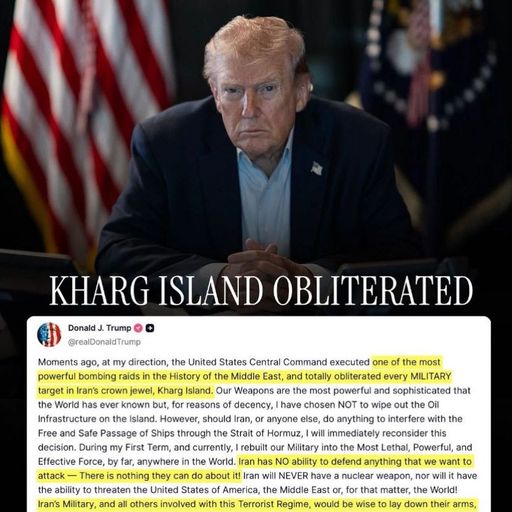
Strait of Hormuz, urgent! Goldman Sachs issues a major warning!
The situation in the Strait of Hormuz remains tense.
According to the latest reports, the UK Maritime Trade Operations (UKMTO) announced on the 12th that a cargo ship was hit by an unidentified projectile near the Strait of Hormuz, causing the vessel to catch fire. U.S. President Donald Trump stated on March 11 that the United States will focus on the situation in the Strait of Hormuz.
Currently, the heightened tensions in the Strait of Hormuz continue to disrupt global energy markets. Goldman Sachs, in its latest report, warned that extended disruptions in the Strait could cause oil prices to surge to $93 per barrel in extreme scenarios, potentially surpassing the 2008 record highs.
A cargo ship was attacked near the Strait of Hormuz
On March 12, Xinhua News Agency reported that the UK Maritime Trade Operations (UKMTO) said that a cargo ship was struck by an unidentified projectile near the Strait of Hormuz, and the vessel caught fire.
The UKMTO issued a statement saying the incident occurred 35 nautical miles north of Al Arish, United Arab Emirates. All crew members are safe, and investigations are ongoing.
On March 11, the UKMTO reported that a cargo ship was hit by an unidentified projectile near the Strait of Hormuz, causing the vessel to catch fire. The incident happened 11 nautical miles north of Oman.
The Strait of Hormuz carries about a quarter of the world’s seaborne oil transportation, as well as large volumes of liquefied natural gas and fertilizers. Since the start of military actions by the U.S. and Israel, shipping through the strait has nearly come to a halt, with hundreds of ships stranded at anchor, and global oil prices soaring to their highest levels since 2022.
According to CCTV News, Trump stated on March 11 that the U.S. is in a “favorable position” in the war against Iran and will focus on the situation in the Strait of Hormuz.
Trump also said that the U.S. knows where Iran’s “secret organizations” are and that they are being closely monitored. Earlier this week, in an interview, Trump mentioned the Strait of Hormuz, saying he is “considering occupying it.”
It is worth noting that Trump has recently stated multiple times that the U.S. is prepared to provide naval escort when necessary to restore regular shipping through this critical waterway.
However, according to sources familiar with the matter, since the start of hostilities with Iran, the U.S. Navy has almost daily refused shipping industry requests for military escort in the Strait of Hormuz, citing the high risk of attacks.
Three shipping industry sources, who wished to remain anonymous, said that the U.S. Navy has been holding daily briefings with shipping and oil industry colleagues, during which they stated that they are currently unable to provide escort. They added that the Navy’s assessment in Tuesday’s briefing remains unchanged—that escorting is only possible if the attack risk decreases.
Goldman Sachs issues urgent warning
The security challenges in the Strait of Hormuz continue to escalate.
Maritime security experts and analysts point out that even forming an international coalition will face significant challenges, as Iran has the capability to lay mines and deploy inexpensive attack drones. Adel Bakawan, director of the Middle East and North Africa Research Institute, said, “Whether it’s France, the U.S., an international coalition, or any other force, ensuring the safety of the Strait of Hormuz is beyond their capacity.”
As a result, international oil prices continue to strengthen. On March 12, during the Asian trading session, Brent crude futures briefly surpassed $100 per barrel. As of 15:20 Beijing time, WTI crude futures rose by 4.58%, to $91.23 per barrel; Brent crude futures increased by 4.81%, to $96.41 per barrel.
Goldman Sachs significantly raised its fourth-quarter oil price forecast in its latest report, citing that the duration of the disruption in oil flow through the Strait of Hormuz is expected to be longer than previously assumed. This adjustment implies that if the Middle East situation worsens further, oil prices could break the 2008 record high.
Analysts Daan Struyven and others at Goldman Sachs raised their fourth-quarter Brent crude forecast from $66 to $71 per barrel, and WTI from $62 to $67 per barrel.
Goldman Sachs pointed out that if the flow remains disrupted into late March, oil prices are likely to trend upward “until the market is confident that a prolonged interruption is unlikely.” The bank also warned that if the flow remains under pressure throughout March, daily oil prices could surpass the 2008 peak levels.
The core basis for these revised forecasts is a reassessment of the duration of the flow disruption in the Strait of Hormuz. Goldman Sachs adjusted its baseline assumption from a 10% reduction in flow for 10 days to a 21-day period, followed by a gradual recovery over 30 days.
The report outlined two scenarios with different price estimates: in a 30-day disruption, the average Q4 Brent crude price is expected to be $76 per barrel, and WTI $72; if the disruption extends to 60 days, Brent could rise to $93, and WTI to $89 per barrel.
While Goldman Sachs acknowledges that oil prices face risks on both sides, its report states that the risk balance “leans upward.” Under the current uncertain flow conditions, market expectations about the duration of the disruption will be a key factor in short-term price movements. The statement suggests that investors should prepare for higher energy prices.