


Futures
Access hundreds of perpetual contracts
TradFi
Gold
One platform for global traditional assets
Options
Hot
Trade European-style vanilla options
Unified Account
Maximize your capital efficiency
Demo Trading
Introduction to Futures Trading
Learn the basics of futures trading
Futures Events
Join events to earn rewards
Demo Trading
Use virtual funds to practice risk-free trading
Launch
CandyDrop
Collect candies to earn airdrops
Launchpool
Quick staking, earn potential new tokens
HODLer Airdrop
Hold GT and get massive airdrops for free
Launchpad
Be early to the next big token project
Alpha Points
Trade on-chain assets and earn airdrops
Futures Points
Earn futures points and claim airdrop rewards


More





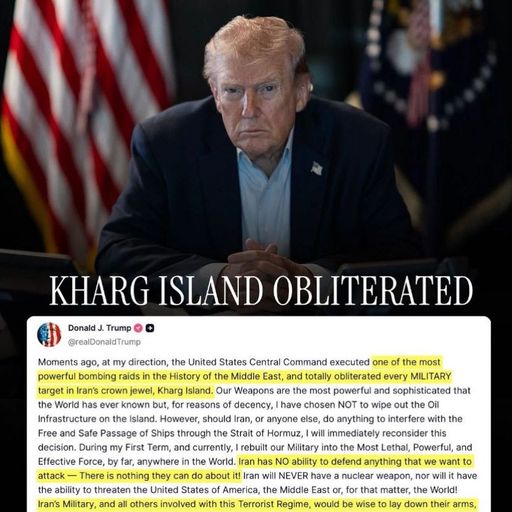
Trump Strongly Pushes "Escort Coalition": No Ships Sent, NATO's Future "Very Terrible"; Japan and Australia Have Already Refused
U.S.-led Hormuz Strait escort alliance faces initial resistance
According to Xinhua News Agency, the U.S. government plans to announce the formation of a so-called Hormuz Strait “escort alliance” soon. Trump has pressured seven allies dependent on Middle Eastern oil to join the proposed multinational escort coalition. Trump warned that if NATO allies do not take action to assist the U.S. in keeping the Strait of Hormuz open, NATO will face a “very bad” future. Last Sunday, The Wall Street Journal quoted U.S. officials saying the White House plans to announce the establishment of a multilateral alliance as early as this week.
However, key allies have responded tepidly. Global Times reports that Japan and Australia have explicitly stated they have no plans to dispatch ships. the UK has no related deployments, and France has refused to send additional military forces. Germany will not participate in international military operations to protect commercial ships in the Strait of Hormuz.
Trump pressures: No deployment, NATO’s “future is worrying”
Over the weekend, Trump continued to speak out, urging allies to join the U.S.-led Hormuz Strait escort alliance.
On Saturday, he posted on Truth Social that “many countries, especially those affected by Iran’s attempts to block the Strait of Hormuz, will send warships” to ensure the security of oil trade routes.
According to Xinhua, the U.S. government has contacted seven countries for support, but the White House has not publicly disclosed the specific list. Trump previously named China, France, Japan, South Korea, and the UK on social media.
On Sunday, Trump intensified pressure on Europe in an interview with the Financial Times, warning that if NATO members do not provide assistance, NATO will face a “very bad future.” He told reporters on Air Force One returning to Washington: “I ask these countries to protect their own territories because that’s their territory, that’s where they get their energy.”
Additionally, according to The Paper, on March 16, Foreign Ministry spokesperson Lin Jian held a routine press conference. When asked by BBC whether Trump’s threat to cancel his visit to Beijing if China does not assist in escorting in the Strait of Hormuz was responded to?
Lin Jian said, “Head-of-state diplomacy plays an irreplaceable strategic leading role in China-U.S. relations, and both sides are maintaining communication regarding President Trump’s visit to China.”
Allies decline one after another, hindering alliance formation
Responses from allies to the Hormuz Strait escort alliance have been lukewarm.
Japanese Prime Minister Fumio Kishida explicitly stated in Parliament that there are currently no plans to send escort ships to the Middle East. Defense Minister Kishi Nobuo also pointed out that, although technically feasible, it is not appropriate to send ships amid the current highly turbulent situation. Liberal Democratic Party Policy Research Council Chairman Koichi Hagiuda emphasized that Tokyo’s participation in military actions has a “very high” threshold.
As the world’s fifth-largest economy, Japan relies on Middle Eastern oil imports for 90%, with 70% passing through the Strait of Hormuz. To address potential supply disruptions, Japan began releasing about 15 days’ worth of private-sector-held oil reserves on Monday, the first time since the Russia-Ukraine conflict in 2022. Subsequently, the country will release a month’s worth of national reserves.
Australia also explicitly refuses to send ships. Transport Minister Catherine King stated, “We will not send ships to the Strait of Hormuz.” Opposition defense spokesperson James Paterson suggested that an assessment is needed to determine whether such a move aligns with national interests and whether there are ships available to carry out the task.
German Foreign Minister Annalena Baerbock said on March 15 local time that Germany will not participate in international military operations to protect ships in the Strait of Hormuz. The UK is considering deploying airborne mine clearance aircraft to help restore oil export channels, but officials are concerned that sending ships at U.S. request could escalate tensions. The South Korean presidential office said it will carefully study and decide. France emphasized that the current military posture aims to maintain stability rather than escalate conflicts.
Risk warning and disclaimer
Market risks are present; investments should be cautious. This article does not constitute personal investment advice and does not consider individual users’ specific investment goals, financial situations, or needs. Users should consider whether any opinions, views, or conclusions in this article are suitable for their particular circumstances. Invest at your own risk.