


Futures
Access hundreds of perpetual contracts
TradFi
Gold
One platform for global traditional assets
Options
Hot
Trade European-style vanilla options
Unified Account
Maximize your capital efficiency
Demo Trading
Introduction to Futures Trading
Learn the basics of futures trading
Futures Events
Join events to earn rewards
Demo Trading
Use virtual funds to practice risk-free trading
Launch
CandyDrop
Collect candies to earn airdrops
Launchpool
Quick staking, earn potential new tokens
HODLer Airdrop
Hold GT and get massive airdrops for free
Launchpad
Be early to the next big token project
Alpha Points
Trade on-chain assets and earn airdrops
Futures Points
Earn futures points and claim airdrop rewards


More





Maritime data shows: The number of ships transiting the Strait of Hormuz has fallen to zero for the first time!
The UK Daily Telegraph reported on the 16th that there were no ships navigating the Strait of Hormuz, a key global energy shipping route, on the 14th. This is the first time since the US and Israel launched military actions against Iran.
The report cited data from maritime analytics firm Windward, stating: “On the 14th, the number of ships passing through the Strait of Hormuz dropped to zero for the first time since the conflict began. Before the conflict, an average of 77 ships passed through the strait daily.”
Trump Reportedly Seeks to Form “Hormuz Alliance” This Week
According to Axios on the 16th, U.S. President Donald Trump is attempting to form a so-called “Hormuz Alliance” to control the Strait of Hormuz, and there are reports that he hopes to announce the formation of this alliance later this week.
The report quoted multiple sources saying that U.S. officials engaged in intensive phone diplomacy over the weekend with European, Asian, and Gulf countries to secure political commitments for forming the so-called “Hormuz Alliance.” No country has publicly committed yet, but Trump expects some nations to announce support this week.
A source familiar with U.S. diplomatic negotiations said that the current priority for the U.S. is to secure political commitments, with other issues to be addressed later.
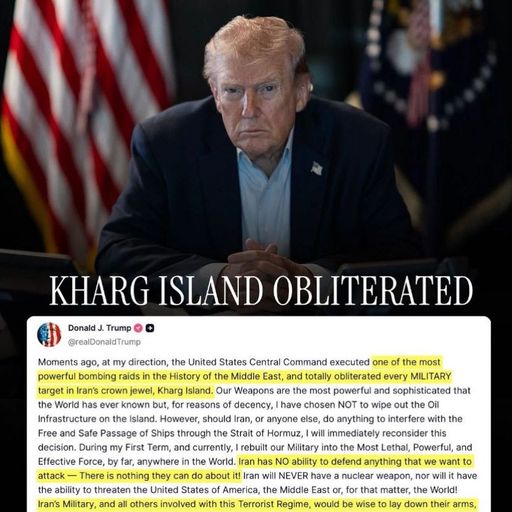
The report stated that if oil tanker navigation in the Gulf remains blocked, Trump might consider seizing Iran’s critical oil facilities on Halek Island, an action that would require U.S. ground forces. A senior White House official said Trump has not made any decision regarding Halek Island, but if the blockade of the Strait of Hormuz continues, the situation could change. “The president will not sit idly by while Iran controls the pace of the conflict.”
Sources familiar with the matter said that as long as the blockade of the Strait of Hormuz persists and oil exports from the Gulf are limited, Trump will be unable to end the conflict even if he wants to.
Regarding the navigation of the Strait of Hormuz, Iranian Foreign Minister Amir Abdollahian on the 15th said that some countries have contacted Iran, hoping their ships can pass safely through the strait. He stated that Iran is willing to negotiate with these countries, but the final decision will be made by the Iranian military.
Germany Says No Need to Participate in Hormuz Strait Escort
German Foreign Minister Annalena Baerbock expressed skepticism on March 15 about expanding EU escort operations to the Strait of Hormuz, stating that Germany does not see the need to participate. Baerbock said that security can only be guaranteed when the conflict is fundamentally resolved.
According to the Australian Broadcasting Corporation, Australian Transport Minister Catherine King also stated on March 16 that Australia will not send naval ships to the Strait of Hormuz. Additionally, Shadow Defence Minister James Paterson said Australia needs to carefully consider requests to escort ships through the strait, as Australia does not have vessels capable of protecting itself from drone or missile attacks.
US Oil Companies Urge Resumption of Strait Shipping to Stabilize Oil Prices
Several senior executives from U.S. multinational oil companies recently told U.S. government officials that continued blockage of the Strait of Hormuz could lead to further increases in international oil prices, causing volatility in the global energy market and putting pressure on the global economy. U.S. officials stated, “There is currently little that can be done.”
The Wall Street Journal reported on the 15th that the U.S. government held a series of meetings, including with Energy Secretary Jennifer Granholm and Interior Secretary Deb Haaland, to discuss the impact of the current situation on the economy. Oil company executives believe that the market is affected by tensions, and since U.S. oil production is unlikely to increase significantly in the short term, the only way to address market instability is to restore passage through the Strait of Hormuz. ExxonMobil CEO Darren Woods warned that market volatility could lead to higher oil prices and supply shortages of refined products.
Executives from Chevron and ConocoPhillips also expressed concerns about current supply disruptions. An unnamed senior government official said that the U.S. knows oil prices will continue to rise but “there is little that can be done right now.” Chevron CEO Mike Wirth previously stated that the market is “full of volatility and uncertainty, difficult to predict.” Crude oil transported through the Strait of Hormuz accounts for about one-fifth of global oil transportation. Qatar, one of the top three exporters of liquefied natural gas, ships nearly all of its LNG through the Strait of Hormuz, accounting for about 20% of global supply.
U.S. Embassy in Iraq Attacked
On the morning of the 16th, local time, the U.S. Embassy in Baghdad’s Green Zone was attacked.
During the attack, the U.S. embassy activated its air defense alarms and C-RAM systems, shooting down an incoming explosive device. It is currently unclear whether the projectile was a drone or a missile.
The U.S. has not responded publicly yet.
Iran States 440 kg of 60% Enriched Uranium Temporarily Buried, No Plans to Remove
On March 15th, Iranian Foreign Minister Amir Abdollahian appeared on CBS’s “Face the Nation,” discussing Iran’s nuclear program. He stated that before the U.S. and Israel launched war, Iran had made significant concessions in indirect negotiations with the U.S., offering to dilute uranium enriched to 60% to demonstrate that Iran has no intention of seeking nuclear weapons.
He said that 440.9 kilograms of 60% enriched uranium are currently buried beneath the ruins of Iran’s damaged nuclear facilities, and Iran has no plans to remove it for now. If removal becomes necessary in the future, it will be done under IAEA supervision.
(Original source: Daily Economic News)