


Futures
Access hundreds of perpetual contracts
TradFi
Gold
One platform for global traditional assets
Options
Hot
Trade European-style vanilla options
Unified Account
Maximize your capital efficiency
Demo Trading
Introduction to Futures Trading
Learn the basics of futures trading
Futures Events
Join events to earn rewards
Demo Trading
Use virtual funds to practice risk-free trading
Launch
CandyDrop
Collect candies to earn airdrops
Launchpool
Quick staking, earn potential new tokens
HODLer Airdrop
Hold GT and get massive airdrops for free
Launchpad
Be early to the next big token project
Alpha Points
Trade on-chain assets and earn airdrops
Futures Points
Earn futures points and claim airdrop rewards


More





Market at "Critical Breakout Point"! Goldman Sachs Reveals: Institutional Selling and Shorting of U.S. Stocks This Week Reached "Historic Levels"
Unprecedented institutional selling is pushing the U.S. stock market toward a dangerous tipping point—potentially triggering a short squeeze if geopolitical tensions ease, or deepening declines if tensions continue to escalate.
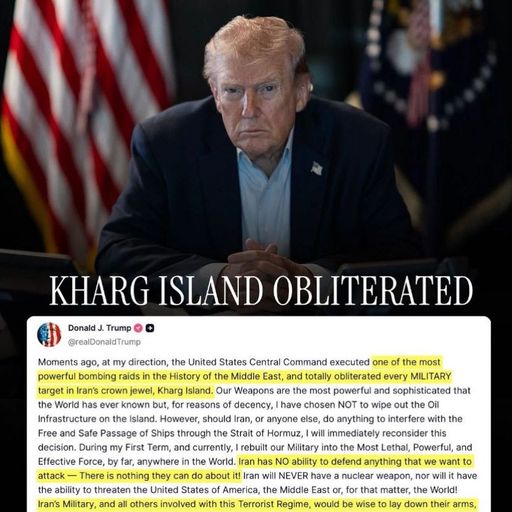
Goldman Sachs futures desk data shows that from March 3 to 10, asset managers net sold $36.2 billion worth of S&P 500 futures, marking the largest weekly reduction in over a decade by nominal value. Goldman’s Robert Quinn directly attributes this rapid retreat to the Iran war and the accompanying surge in oil prices, calling it the immediate catalyst for the swift withdrawal of institutional funds.
Meanwhile, Goldman Sachs ETF trading data indicates that on Thursday, short positions in U.S.-listed ETFs increased by 10% in a single day—its second-largest single-day rise ever—pushing overall macro product short exposure to its highest level since September 2022. The dual decline in futures and ETF short positions clearly signals extreme market pressure.
However, the ultimate outcome of this game largely depends on how geopolitical developments unfold. John Flood, head of U.S. trading at Goldman Sachs, notes that investors are still hoping that the broad uncertainty sparked by the Iran conflict will dissipate quickly, but the window for this expectation is narrowing—if no positive progress occurs within the next two weeks, “from a stock index perspective, we will face problems.”
$36.2 billion in net institutional sales, S&P futures experience decade’s largest weekly sell-off
Goldman Sachs futures desk data reveals a historic shift in institutional behavior this week. Between March 3 and 10, asset managers net sold $36.2 billion of S&P 500 futures, surpassing any weekly sell-off in over ten years in nominal terms.
Robert Quinn highlights the core driver of this rapid retreat: “The ongoing escalation of the Iran war and the synchronized spike in oil prices resonated, catalyzing a swift exodus of institutional funds.” Notably, while institutions massively sold futures, other non-dealer market participants showed mixed attitudes; leverage funds remained relatively resilient amid ongoing volatility in commodities, without taking similarly aggressive directional bets.
ETF short positions hit record highs, with short exposure rising to a three-year peak
In the same week as the historic futures sell-off, Goldman Sachs ETF trading data also recorded a startling figure. On Thursday, U.S.-listed ETF short positions in Goldman’s prime brokerage accounts surged by 10% in a single day—its second-largest daily increase ever, after a 16% jump on April 2, 2025.
This resonance between futures and ETF short positions has pushed overall macro product short exposure to its highest since September 2022. The significance is notable—April 2025 marked one of the most intense policy shock days in recent market history, and current ETF shorting intensity is approaching that level, reflecting the market’s suppressed sentiment.
Short squeeze and crash both exist on either side of a critical threshold
Despite this unprecedented scale of deleveraging, Goldman Sachs warns clients that institutional net long positions remain at the 71st percentile over the past two years, not fully cleared. This structural feature indicates the market is in a highly sensitive balance, with the direction not yet definitively set.
John Flood points out that large-scale de-risking (benefiting from the synchronized ETF short squeeze, with overall leverage not fully contracted) combined with rapidly deteriorating sentiment—whose indicators nearly mirror institutional S&P futures positions—“means that just one trigger could spark a fierce short squeeze, creating a perfect storm where previously selling ‘weak hands’ institutions rush to chase gains.”
Both possible outcomes ultimately hinge on one key variable: the trajectory of the Iran conflict. Flood states that investors are still hoping the broad uncertainty caused by this conflict will dissipate quickly. If signs of easing emerge, the massive short positions could ignite a market surge; but the longer the delay, the greater the vulnerability, eventually breaching a critical point and causing an unavoidable downward shock.
“Market participants are hoping for some resolution signals within the next two weeks,” Flood warns: