


Futures
Access hundreds of perpetual contracts
TradFi
Gold
One platform for global traditional assets
Options
Hot
Trade European-style vanilla options
Unified Account
Maximize your capital efficiency
Demo Trading
Introduction to Futures Trading
Learn the basics of futures trading
Futures Events
Join events to earn rewards
Demo Trading
Use virtual funds to practice risk-free trading
Launch
CandyDrop
Collect candies to earn airdrops
Launchpool
Quick staking, earn potential new tokens
HODLer Airdrop
Hold GT and get massive airdrops for free
Launchpad
Be early to the next big token project
Alpha Points
Trade on-chain assets and earn airdrops
Futures Points
Earn futures points and claim airdrop rewards


More





Middle East Conflict Stirs Up Inflation "Hornet's Nest"! The Year's Most Significant "Super Central Bank Week" is Coming
Caixin March 16 News (Editor: Xiaoxiang) From Washington to London, from Brussels to Tokyo, central banks around the world are set to hold their most “intense” series of rate meetings this year during what is called the “Super Central Bank Week,” marking the first assessment of economic losses since the outbreak of the US-Iran conflict over two weeks ago.
According to industry estimates, about 20 central banks worldwide will hold monetary policy meetings this week, nearly covering two-thirds of the global economy. Among the G10 currencies, eight central banks are scheduled to announce policy decisions. Many industry insiders suggest that facing a new wave of inflation threats brought by the Iran conflict, some central banks may be forced to delay rate cuts or even consider rate hikes in certain cases…
Of course, policy adjustments are not imminent: the Federal Reserve, the European Central Bank, and the Bank of England are all expected to keep borrowing costs unchanged while assessing how soaring energy prices will impact consumer prices and economic growth.
However, for these three major central banks and others preparing to set policies, as more officials recognize the risk of renewed inflation shocks, their tone will undoubtedly become more cautious.
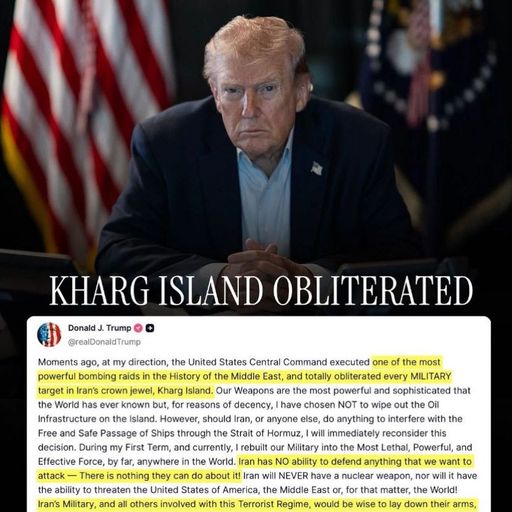
The situation largely depends on how long the Middle East conflict will last—and markets are actively trying to evaluate this. Investors worried about stagflation are troubled by oil price fluctuations and uncertainties about Trump’s next move, raising questions about how quickly central bank leaders will respond to new inflation pressures.
It is certain that global policymakers are on high alert as they grapple with US tariffs and geopolitical fragmentation—despite it not being their preference. If the Middle East situation again pushes up prices, hampers economic growth, or causes sharp currency fluctuations, central banks are prepared to intervene at any moment.
“Central banks can set interest rates, but cannot reopen the Strait of Hormuz,” said macroeconomist Tom Orlik. “It’s expected that Powell, Lagarde, Bailey, and other central bank leaders will keep rates steady this week, issue cautious signals, and hope the Iran conflict ends sooner rather than later before it causes another inflation problem they cannot control.”
In fact, the heightened alert is not only about Iran. Many industry insiders still vividly remember the last inflation shock, when prices in major economies surged into double digits due to the Russia-Ukraine conflict in 2022.
Like then, the duration of the current Middle East conflict is unpredictable. Trump’s stance remains unpredictable—sometimes saying the war could “end soon,” other times claiming the US has “plenty of time” when bombing targets from the air. Meanwhile, Iran’s new Supreme Leader, Mullah Khamenei, has vowed to keep the Strait of Hormuz—vital for energy transportation—effectively closed.
Below is Caixin’s preview of the main central banks’ upcoming rate meetings this week:
Federal Reserve
Market consensus expects the Fed to keep rates unchanged at its March 17-18 policy meeting, aligning with expectations from a few weeks ago. However, recent days have seen the narrative of “maintaining the status quo”—that this can be easily sustained for months—disrupted by renewed turbulence in the labor market and the Middle East war causing oil prices to spike.
The combination of “negative non-farm payrolls” and “oil prices breaking $100” has created a conflict for the Fed’s dual mandate (price stability and maximum employment), clouding the short-term outlook for interest rates.
Additionally, while markets no longer fully expect rate cuts in 2026, they still lean toward easing policies—potentially making the US monetary policy an exception among the G7, where other major central banks are expected to raise rates within the year.
Morgan Stanley economists recently reaffirmed their forecast of two 25 basis point rate cuts in June and September, suggesting that although rate hikes might be delayed, this could mean the Fed will need to take stronger action later.
German bank economist Christoph Balz said that even if oil prices stay high for an extended period, “given the political pressure on loose monetary policy—especially ahead of the November elections—the likelihood of a rate cut by the Fed remains higher than that of a rate hike.”
European Central Bank
Europe’s situation differs markedly from the US. Despite economic growth risks, the ECB remains focused on inflation, and market expectations for further easing have almost completely vanished.
The ECB is widely expected to keep deposit rates unchanged on Thursday. However, the Middle East crisis has nearly pulled the ECB out of its previous “comfort zone” as expressed by President Lagarde and colleagues.
Rising energy prices have fueled bets on rate hikes, forcing the ECB to explain how inflation risks have changed and how close they are to meeting market expectations.
Many investors are eager to find parallels between the current energy shocks and the crisis after the Russia-Ukraine conflict in 2022, when the ECB was seen as resistant to market pressure to raise rates. While the ECB will try to avoid repeating past mistakes, a hurried rate hike seems unlikely.
Bank of Japan
The Bank of Japan is expected to keep its benchmark rate steady on Thursday, while reassuring markets that it remains on the path to normalization.
Governor Ueda Kazuo may emphasize the need to closely monitor developments, given Japan’s high dependence on Middle Eastern oil imports. Persistently high crude oil prices could harm Japan’s economy and intensify inflation pressures. If the BOJ’s policymakers adopt an overly dovish tone, they will also need to assess the risk of further yen depreciation, which last week fell to its lowest level since 2024.
Traders will scrutinize the BOJ’s statement and Ueda’s comments for clues, while investors are also keenly assessing the possibility of a rate hike in April. Earlier this month, insiders suggested that action might be possible then.
Bank of England
Amid ongoing uncertainty about inflation trends and economic outlook, disagreements within the BOE over whether to further cut rates are intensifying. Governor Bailey indicated last month in a parliamentary hearing that he might support another rate cut at the March 19 meeting. However, with the evolving Middle East situation and rising oil prices, the bank is now very likely to keep rates unchanged on Thursday.
Economists at ING and RSM UK warn that if recent jumps in energy costs prove persistent, inflation could rebound to more than twice the BOE’s 2% target.
Despite signs of economic weakness before the current energy shock—last Friday’s data showed the UK economy unexpectedly stagnated in January, risking falling short of the BOE’s 0.3% Q1 GDP growth forecast—rising energy prices are forcing officials to refocus on consumer prices.
Bank of Canada
The Bank of Canada will announce its rate decision on Wednesday. Prior to that, Monday’s February inflation data will provide key insights into how the conflict in the Middle East has pushed up oil prices and inflation pressures.
They are also concerned about Friday’s (post-meeting) employment data, which may show that February saw the largest monthly decline in employment in four years.
With overall inflation hovering near the 2% target, markets expect the BoC to hold its policy rate at 2.25% on Wednesday. Attention will also be on Governor Macklem’s post-decision press conference for signals on how the Iran crisis might influence future policy.
Swiss National Bank
The SNB’s decision on Thursday—its first rate decision of the year—will be closely watched, especially as the Swiss franc has appreciated to a decade-high against the euro. Previously, policymakers broke their usual silence, signaling a stronger willingness to intervene.
While any change in language regarding forex will be noteworthy, economists generally expect rates to remain at zero, indicating they believe current conditions do not warrant returning to negative rates—an even more aggressive and potentially harmful move for the economy.
The franc’s strength is a key concern for the SNB, as its appreciation lowers import costs and suppresses already weak inflation. Still, rising oil prices could push prices higher, easing some pressure on their policy stance.
Riksbank (Swedish Central Bank)
The Riksbank is expected to keep its benchmark rate at 1.75% on Thursday, consistent with previous signals. Sweden’s economy remains resilient, and inflation has fallen below the 2% target.
However, new economic forecasts and revised interest rate paths will be focal points, as investors watch whether the Middle East turmoil prompts the Riksbank to change its view—that the next move will be an interest rate hike next year.
Reserve Bank of Australia
The RBA will decide on the cash rate on Tuesday, with markets pricing in a high chance of a second consecutive rate hike—currently at 3.85%.
Last month, the RBA became the first major developed-market central bank this year to raise rates, citing persistent price pressures and excess demand amid constrained supply. Data since then has reinforced the resilience of the Australian economy, while the Iran conflict has heightened concerns over domestic inflation.
RBA officials face a tough task: assessing whether another rate hike will boost credibility or risk over-tightening amid increasing global uncertainty. Markets will scrutinize the post-meeting statement and Governor Lowe’s press conference for signals that February marked the start of a new tightening phase.