


Futures
Access hundreds of perpetual contracts
TradFi
Gold
One platform for global traditional assets
Options
Hot
Trade European-style vanilla options
Unified Account
Maximize your capital efficiency
Demo Trading
Introduction to Futures Trading
Learn the basics of futures trading
Futures Events
Join events to earn rewards
Demo Trading
Use virtual funds to practice risk-free trading
Launch
CandyDrop
Collect candies to earn airdrops
Launchpool
Quick staking, earn potential new tokens
HODLer Airdrop
Hold GT and get massive airdrops for free
Launchpad
Be early to the next big token project
Alpha Points
Trade on-chain assets and earn airdrops
Futures Points
Earn futures points and claim airdrop rewards


More





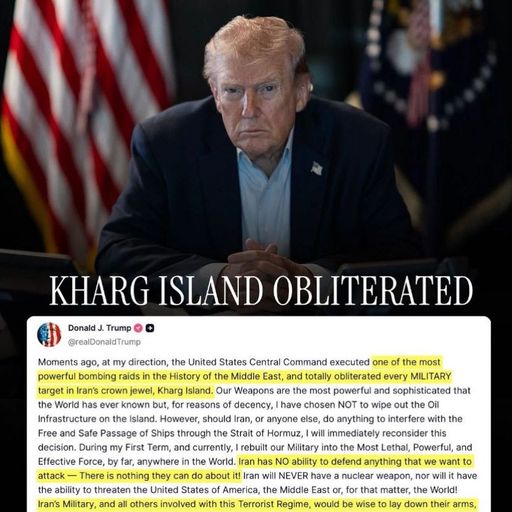
Day 14 of the Hormuz Chokehold: Who's Bleeding, Who's Lying?
On March 16, Brent crude oil broke through $106. This is not just a price; it’s a real-time ECG of the global security architecture.
Two weeks ago, when the first mines sank in the Strait of Hormuz, the market was still debating whether this was just another “short-term panic.” Today, three facts are unavoidable: the U.S. has moved the last available amphibious force from the Pacific, North Korea has launched over a dozen missiles into the Sea of Japan, and Chinese fishing vessels in the East China Sea have shifted their formations dozens of nautical miles eastward compared to previous deployments.
This is not an energy crisis. It’s an experiment in dismantling the U.S. global security framework’s load-bearing walls. Now, let’s trace the cracks.
● On March 14, the Pentagon quietly confirmed: the 31st Marine Expeditionary Unit stationed in Okinawa—about 2,500 Marines aboard the amphibious assault ship USS LPD-17—are heading full speed to the Middle East. Satellite images show the ship’s wake indicating it’s moving westward at high speed with a “large and slender profile.” Three days earlier, it was participating in exercises near the Luzon Strait. Today, its destination is the Strait of Hormuz.
This is the most significant offensive asset dispatched from the Indo-Pacific Command to date. Previously, only defensive systems like THAAD and Patriot were moved. The USS LPD-17 carries F-35B, MV-22 Ospreys, and a full set of landing equipment. Its mission is not defense but to seize or control territory along the Iranian coast.
Then, the vacuum appeared.
● On March 14 at 1:20 p.m., North Korea launched over a dozen ballistic missiles toward the Sea of Japan from the Sunan area. South Korea’s Yonhap reported this as “the third launch this year,” but emphasized that “launching over ten missiles at once is rare.” The rarity is easy to understand: just 24 hours earlier, Trump had told the White House that he wanted to know if Kim Jong-un was willing to engage in dialogue.
The answer to dialogue was a barrage of missiles.
● On the same day, AFP’s vessel tracking data was widely circulated: about 1,200 Chinese fishing vessels gathered in the East China Sea in two parallel lines, positioned further east and closer to Japanese waters than the two previous gatherings in January. Australian naval veteran Parker’s assessment was widely cited: this is not fishing; it’s “demonstrating coordinated action capabilities” to observers. A professor at the U.S. Naval War College wrote a line on X that was later deleted: “When you leave the table, others keep eating.”
Let’s return to the Middle East and the numbers themselves.
The International Energy Agency announced the release of 400 million barrels of strategic reserves—the largest in 52 years. Japan began releasing about 8 million barrels on the 16th, equivalent to 45 days of demand, the largest since its reserve system was established. South Korea is considering a fuel price cap—the first since 1997.
It sounds decisive, but the gap cannot be filled.
Gulf oil producers are offline about 6.7 million barrels per day. The IEA’s release rate cannot cover more than 15%. Saudi Arabia’s pipeline capacity is around 7 million barrels per day, but actual loading at Yanbu port has been confirmed by Argus Media to be stuck at 2.72 million barrels—due to pump stations, berths, and Red Sea insurance costs, a triple physical limit.
And there’s natural gas. Japan has only three weeks of LNG stockpiles, which account for 40% of its power grid. Qatar’s export facilities are among the targets of Iran’s first-day retaliatory strikes. That’s why Japan is so panicked this time. After Fukushima in 2011, they relied on Qatar’s natural gas to sustain household electricity. Now, that pipeline has been cut.
● Japan: the most exposed economy, bar none. 95% of Middle Eastern oil depends on it, with 70% passing through Hormuz. Nominal oil reserves are over 200 days, but LNG stocks last only three weeks. Power companies have begun warning: electricity prices may rise in April. The Nikkei has fallen about 7% since the conflict began, and the yen is weakening as a safe-haven currency. The breaking point: around 30-40 days, when LNG runs out.
● South Korea: 70.7% of its oil comes from the Middle East, and President Lee Jae-myung has already called for a fuel price cap. The KOSPI’s worst trading day triggered a circuit breaker. But the real vulnerability is at the end of the supply chain: Samsung and SK Hynix’s wafer fabs require stable power. Just a few voltage fluctuations can reduce yields. This is not just South Korea’s internal issue; it’s a global AI chip supply chain problem. Breaking point: synchronized with Japan.
● India: consumes 5.5 million barrels of oil daily, with 45% passing through Hormuz. The U.S. granted a 30-day waiver to continue buying Russian oil—acting as a crude buffer. But LPG has no buffer. India imports 62% of its LPG, 90% via Hormuz, and LPG is the basic cooking fuel for hundreds of millions of households. Pune’s crematoriums have already started switching back to wood from natural gas. Breaking point: 20-30 days, with social transmission reaching a critical point.
● Europe: less directly exposed, but its natural gas reserves were only 30% at the start of the conflict. The Netherlands is the lowest at 10.7%. Since February 28, natural gas prices have risen 75%. Russia is an invisible winner: since the conflict began, Russian fossil fuel export revenues have increased by about €6 billion. Breaking point: when inventories hit 15%—within weeks at current consumption rates.
● United States: the least physically exposed but the most politically vulnerable. Only 2.5% of its oil comes from Hormuz, with 415 million barrels in strategic reserves and shale oil capacity lagging 3-6 months behind. But California is an exception: 61% of its refinery crude depends on imports, 30% via Hormuz. More importantly, oil prices are the most direct signal to U.S. voters. Trump is waging war while promising lower prices—physically impossible to do both simultaneously. Breaking point: politically, it’s happening now.
● On March 14, Trump suddenly posted on social media: he hopes China, France, Japan, South Korea, the UK, and others “send warships” to the Strait of Hormuz to help ensure safe passage.
● The next day, responses from various countries arrived. France said “no,” its aircraft carrier would stay in the eastern Mediterranean. Japanese officials said they “would not send ships just because of Trump’s call” and would decide independently. South Korea said it would “consider carefully.” The UK Ministry of Defence said “discussions are ongoing.” Germany’s foreign minister said “Germany does not need to participate.”
● Meanwhile, inside the White House, divisions have been reported: the economic faction wants to end quickly, declare victory, and withdraw; the hawks want a decisive outcome; the populists (MAGA anti-war faction) demand not to escalate the war. The Financial Times noted that Sacks, the White House’s AI and crypto chief, publicly stated on a podcast: “We have greatly weakened Iran’s military capability, and now is the best time to declare victory and withdraw.” This is the first public expression of dissatisfaction with military actions by senior Trump officials.
● Iran’s Speaker of Parliament, Kalibaf, responded more directly: “Anyone who claims to be ‘protected’ by the U.S. is actually completely exposed.”
● Over the past two weeks, the market has experienced seven cycles of “policy signals—physical reality” reversals. Each statement pushed prices down, only for reality to reassert itself within 48 hours. On March 10, Trump hinted at easing sanctions, causing WTI to fall 10%; the same day, the Pentagon announced “the most intense day of strikes.”
● Traders are learning: strategic reserves cannot be consumed, pipeline capacity cannot be drunk, and escort commitments are just wishes before clearing mines.
● On the other side of the Pacific, on AiCoin’s candlestick chart, the overlay of Nikkei, KOSPI, WTI, Brent, and the US dollar index tells the same story: when load-bearing walls are torn down, cracks spread evenly into every room.