


Futures
Access hundreds of perpetual contracts
TradFi
Gold
One platform for global traditional assets
Options
Hot
Trade European-style vanilla options
Unified Account
Maximize your capital efficiency
Demo Trading
Introduction to Futures Trading
Learn the basics of futures trading
Futures Events
Join events to earn rewards
Demo Trading
Use virtual funds to practice risk-free trading
Launch
CandyDrop
Collect candies to earn airdrops
Launchpool
Quick staking, earn potential new tokens
HODLer Airdrop
Hold GT and get massive airdrops for free
Launchpad
Be early to the next big token project
Alpha Points
Trade on-chain assets and earn airdrops
Futures Points
Earn futures points and claim airdrop rewards


More





From Syria to Venezuela: How Trump Administration's Three-Step Strategic Plan Reshapes the Geopolitical Landscape
In early spring 2026, a storm erupted in the international political arena. From the Caribbean to the Middle East, from the Western Hemisphere to the Eastern Mediterranean, Trump’s second term launched a multi-threaded strategic operation with unexpected intensity. This was not a traditional diplomatic conflict but a systematic layout centered on energy control and dominance over strategic waterways. Venezuela, Syria, and Iran experienced nearly simultaneous but internally consistent “system adjustments,” reflecting America’s ambition to redefine its global strategy.
Direct Action in the Western Hemisphere: Venezuela Transforms from “Resistant State” to “Resource Warehouse”
On the early morning of January 3, 2026, Caracas was shattered by explosions. The sudden operation by U.S. special forces not only captured Venezuelan President Maduro but also demonstrated Washington’s complete abandonment of “gentle means.” Once portrayed as a bastion of anti-Americanism in Latin America, the country was instantly brought under direct U.S. control.
Subsequent developments exposed the true purpose of this operation. The Trump administration announced it had seized over 80 million barrels of Venezuelan oil—symbolizing direct U.S. energy control and heralding a new pattern of resource plunder. U.S. Secretary of State and energy officials openly stated that companies like Chevron would invest hundreds of millions of dollars to repair oil fields, and the new local regime was fully dependent on U.S. financial aid.
The Defense Secretary was even more explicit—future U.S. investments would target Venezuela’s 60 strategic minerals. This marked a shift from mere energy competition to comprehensive resource management. While Caracas maintained nominal sovereignty, its economic lifeline was locked into Washington’s treasury.
Gentle Shift in the Eastern Mediterranean: Syria Becomes the Pivot of “U.S. Middle East Policy Rebuilding”
Contrasting sharply with the military raid on Venezuela, the U.S. adopted a very different approach toward Syria—precisely reflecting the Trump administration’s strategic precision.
In June 2025, the Trump administration suddenly signed an executive order lifting long-standing economic sanctions on Syria. The “Caesar Act,” once a tool of sanctions, was suspended, and the EU followed suit, opening the door. But what was the precondition? A UK parliamentary report clearly outlined the U.S. real demands: the new regime must join the Abraham Accords, eliminate terrorist groups, and cooperate with the U.S. to keep ISIS subdued.
Syria thus rapidly transformed from an “international pariah” to an “investor’s target.” No longer under sanctions, it became a key step in the U.S. strategy to dismantle Iran’s regional influence and reshape Middle Eastern order. The U.S. even further pressured the domestic legal system to end temporary protections for about 6,000 Syrian refugees—claiming the regime had changed and they should return to this “safe country.” This simultaneous lifting of sanctions and refugee expulsions vividly demonstrated the cold, instrumental use of state policy tools.
Military Showdown in the Persian Gulf: The Death of Iran’s Leader in Airstrikes
If Venezuela exemplified direct resource seizure, and Syria demonstrated geopolitical reconfiguration, Iran became the ultimate test of U.S. power.
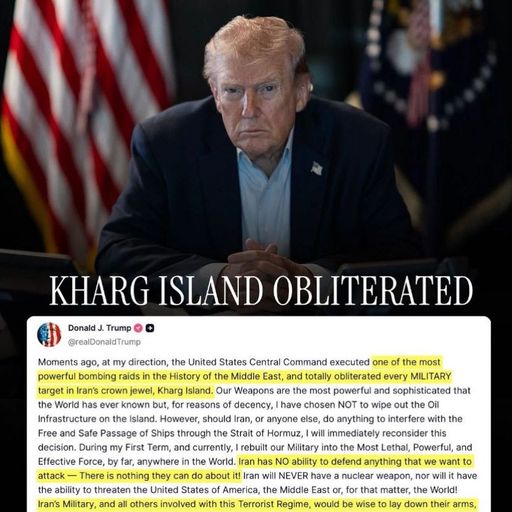
On February 28, 2026, the U.S.-Israel joint operation “Lion’s Roar” was launched, surpassing the scale and targets of the June 2025 “Midnight Hammer.” That earlier operation targeted nuclear facilities; this time, the entire Iranian command system was the target. Media reports indicated over 200 Iranians killed, including 150 elementary school students trapped in the strike zone.
More symbolically, Iran’s Supreme Leader Khamenei was confirmed dead in this operation. Israeli Prime Minister publicly indicated “more and more signs point to his demise,” and the U.S. President directly announced this fact. The death of this leader triggered a fierce Iranian response—closing the Strait of Hormuz, the vital chokepoint carrying one-fifth of global oil shipments. International oil prices surged, and the global supply chain faced another shockwave.
Three Countries, Three Strategies, One Logic: The Trump Era’s Strategic Toolbox
On the surface, the fates of these three countries seem different. But a deeper look reveals they follow the same underlying logic: minimum intervention cost, maximum strategic gain, fastest action speed.
Analysis from China’s Institute of International Studies points out that Trump’s second term features “selective restraint”—cautiously dealing with major powers like China and Russia, but ruthlessly targeting Iran, Venezuela, and others deemed “low-risk, high-reward.” These three countries were chosen because they all meet three criteria: possessing energy or strategic minerals urgently needed by the U.S.; occupying critical geographic positions for global trade; and harboring internal political divisions or power vacuums that can be exploited.
Trump framed these actions as “peaceful victories” in his State of the Union address, but in reality, the U.S. is rapidly transforming military presence into commercial contracts and resource control. Venezuela’s case became a demonstration, proving a new model of “achieving business goals through state power.”
From “Avoiding Meaningless Wars” to “War Commercialization”: A Deep Image Reversal
Data reveals a shocking truth. In less than a year of his second term, the U.S. military conducted operations in seven countries, with over 600 airstrikes—comparable to Obama’s entire eight-year tenure.
Once promising voters to “avoid pointless wars,” Trump has now become a decision-maker who accepts military actions with ease. Venezuelan opposition even “awarded” him a Nobel Peace Prize medal—an ironic symbol of this era’s dislocation.
This shift stems from Trump’s redefinition of presidential power. Under his administration, the White House is no longer a traditional power center but has evolved into a corporate headquarters. Foreign policy is no longer about diplomatic negotiations but framed as large-scale mergers and acquisitions. The Secretary of State openly discusses high-level negotiations with Cuba, and Trump even hints at the possibility of “friendly takeover” of Cuba. The next target? Experts point to this Caribbean island, which also possesses resources and strategic value coveted by the U.S.
The Tilt of the International Order: From Rule Enforcer to Rule Breaker
Trump’s actions have sparked widespread opposition globally. UN Secretary-General issued an urgent condemnation, French President warned of profound consequences for international peace, and Turkish leaders expressed deep concern. But these voices change little—The Strait of Hormuz remains closed, and lives lost cannot be restored.
More profoundly, the U.S. is normalizing the once-controversial tool of “regime change.” If major powers can arbitrarily detain political leaders of other nations and bomb top officials, the post-WWII international order based on sovereign equality faces a fundamental collapse. The world risks reverting to the lawless era of the 19th century.
Xinhua’s commentary highlights the core issue—The Trump administration no longer sees itself as a provider of international public goods but as a tool for weaponizing multilateral mechanisms. When rule-makers violate rules, other countries face simplified choices: submit to U.S. dominance or accelerate their military and economic integration.
Three Countries, Three Turning Points, One New Era
Venezuela’s oil continues flowing into U.S. refineries, filling the national strategic reserves. Syria’s reconstruction projects are being divided up by Gulf capital, becoming a springboard for U.S. reshaping the Middle East. Iran remains under the shadow of bombs, with the Strait of Hormuz closed, experiencing a power vacuum and chaos.
This series of actions across three continents and key nations has always had a single core goal: control over global energy flows and absolute dominance over strategic waterways. The rhetoric of democracy, counter-terrorism, and humanitarianism is just a veneer. Through a lengthy national address and countless midnight military strikes, Trump sends a clear message: in this new era, national competition is no longer a diplomatic game but a resource war. When the U.S. uses its state machinery as a commercial tool, how other nations respond becomes a pressing new challenge for all.