


Futures
Access hundreds of perpetual contracts
TradFi
Gold
One platform for global traditional assets
Options
Hot
Trade European-style vanilla options
Unified Account
Maximize your capital efficiency
Demo Trading
Introduction to Futures Trading
Learn the basics of futures trading
Futures Events
Join events to earn rewards
Demo Trading
Use virtual funds to practice risk-free trading
Launch
CandyDrop
Collect candies to earn airdrops
Launchpool
Quick staking, earn potential new tokens
HODLer Airdrop
Hold GT and get massive airdrops for free
Launchpad
Be early to the next big token project
Alpha Points
Trade on-chain assets and earn airdrops
Futures Points
Earn futures points and claim airdrop rewards


More





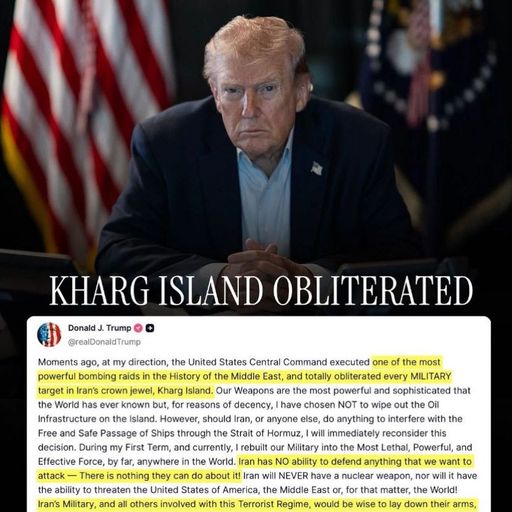
Breaking! $700 Million Iran Wager Ignites Capitol Hill, Prediction Markets Become New "War Intelligence" Powder Keg, Will $BTC, $ETH Face Regulatory Nuclear Bomb?
Wall Street has always favored platforms that can turn public attention into cash flow. But when that attention touches on war and assassination, Washington’s regulatory iron fist comes down. Polymarket and Kalshi, two prediction market companies, are seeking funding at valuations close to top fintech firms, aiming for around $20 billion. Meanwhile, a storm triggered by Iran-related geopolitical contracts is forcing U.S. regulators to accelerate new regulations.
The collision point between this funding boom and political storm lies in the nature of prediction markets: a tool that converts informational advantage into probability data. Originally niche prediction games, they now stand at the forefront due to their involvement in insider trading and war speculation. A Reuters investigation revealed the scale: about $529 million wagered on contracts related to the timing of Iran attacks, with another $150 million linked to Iran’s top leader, Khamenei. More critically, six accounts placed precise bets hours before the attack, earning about $1.2 million in total.
Such reports have pushed prediction markets from crypto corners into the spotlight of government regulation and enforcement. Now, U.S. lawmakers are drafting relevant legislation, and the CFTC chair has announced a notice of proposed rulemaking, soon to introduce targeted regulatory frameworks. Wall Street views event probability predictions as a key part of future information systems; Washington worries that this system could benefit those who shouldn’t profit at the most sensitive moments.
Wall Street’s optimism has logic. Prediction markets generate real-time probability data through trading fees, moving beyond mere gambling to be classified as information tools similar to market data and polls. Their output closely resembles financial terminal quotes, attracting mainstream media. CNBC has a multi-year agreement with Kalshi to incorporate its probability data starting in 2026. Dow Jones has an exclusive partnership with Polymarket, integrating prediction data into outlets like The Wall Street Journal, considering it as vital as earnings reports and interest rates.
However, this cooperation also amplifies the impact of scandals. Once probability data is embedded in mainstream information flows, it directly influences public perceptions of event likelihood and urgency. This is why regulators demand higher standards for fairness, monitoring, and settlement from such platforms. Despite the controversy over Iran-related trades, the valuations of both companies continue to rise, indicating capital’s recognition of their data’s value.
The core advantage of prediction markets is their forward-looking information. Iran contracts, in particular, demonstrate how they touch sensitive areas that governments seek to tightly control. As conflicts escalate, the exposure of precise bets on geopolitical events has raised trust issues, elevating from business concerns to political ones. When trading involves military actions, the motivation for early trades can morph into leaking confidential information.
Policy responses have rapidly escalated. Representatives Mike Levin and Chris Murphy are drafting legislation to explicitly define which event contracts can be legally traded. Rules from the CFTC will influence contract design, monitoring, and enforcement. Washington faces a clear choice: either regulate and restrict these markets to allow orderly industry development or outright ban contracts related to war, assassination, or leadership changes, as these are prone to insider trading and malicious motives.
Kalshi’s class-action lawsuit reveals trust issues that regulation alone cannot fully resolve. Users accuse the platform of refusing to pay approximately $54 million in winnings after winning bets on Iran’s leadership, citing the activation of a “death-related exception clause.” Kalshi claims the rules were clear and has refunded fees to compensate users. This dispute exemplifies current difficulties.
Investors want industry growth and the integration of probability data into mainstream markets. Users hope that, amid controversial outcomes, platform rules remain stable and trustworthy. Regulators aim to prevent these markets from commodifying state actions and avoid scenarios where “knowing secrets = maximum trading profit.” Once these prices start shaping public opinion, the risks could evolve into real governance challenges. For markets like $BTC and $ETH, closely watching macro regulatory trends, this rule game in prediction markets signals an important precondition to consider.
Follow me: Get more real-time analysis and insights on crypto markets! $BTC $ETH $SOL
#GateSquareAIReview #CryptoMarketRising #BitcoinOverSeventyThousand