


Futures
Access hundreds of perpetual contracts
TradFi
Gold
One platform for global traditional assets
Options
Hot
Trade European-style vanilla options
Unified Account
Maximize your capital efficiency
Demo Trading
Introduction to Futures Trading
Learn the basics of futures trading
Futures Events
Join events to earn rewards
Demo Trading
Use virtual funds to practice risk-free trading
Launch
CandyDrop
Collect candies to earn airdrops
Launchpool
Quick staking, earn potential new tokens
HODLer Airdrop
Hold GT and get massive airdrops for free
Launchpad
Be early to the next big token project
Alpha Points
Trade on-chain assets and earn airdrops
Futures Points
Earn futures points and claim airdrop rewards


More





Surge Over 16%! 200 Billion Giant Suddenly Erupts! Chip Stocks Rally Collectively!
Semiconductors Surge!
On the afternoon of March 16, the ChiNext Index rose over 1%. The semiconductor and memory chip sectors continued to climb. Among them, Huahong company’s A-shares, with a total market value exceeding 200 billion yuan, once surged over 16%, and its H-shares rose over 11%. The entire semiconductor sector was driven higher, with chip ETFs soaring in the afternoon, once up over 2%.
Analysts believe that although there are continuous positive rumors involving Huahong, the upcoming GTC 2026 conference hosted by NVIDIA may also be a major catalyst for the semiconductor sector. Additionally, news reports indicate that wafer foundries such as UMC, World Advanced, and Powerchip are raising prices, which has become another driving factor.
Continuous Positive News for Semiconductors
In the afternoon, Huahong’s shares kept rising, and other semiconductor stocks also gained momentum. Zhaoyi Innovation hit the daily limit, while Langke Technology, Yingxin Development, and Taiji Industrial also hit the limit up earlier. Jinsun, Guoke Micro, Yachuang Electronics, and Baiwei Storage all rose over 10%. In Hong Kong, Zhaoyi Innovation and Lankeng Technology gained over 7%, with SMIC and Jingmen Semiconductor also climbing.
The GTC 2026 conference will be held from March 16 to 19 in San Jose, California. Information shows that OpenAI, Google DeepMind (GOOGL.US), Meta (META.US), Microsoft (MSFT.US), and Tesla (TSLA.US) will participate in key stages or major segments. GF Securities believes this event could be a catalyst not only for NVIDIA but also for the entire semiconductor sector. It is expected that NVIDIA will showcase its second-generation Co-Packaged Optical (CPO) switches.
Furthermore, rumors of price hikes continue. First, major international chip design companies like Texas Instruments, NXP, and Infineon recently notified customers of upcoming price adjustments, announcing increases starting April 1 for some products. Today, reports emerged that mature process wafer foundries such as UMC, World Advanced, and Powerchip may raise prices as early as April, with increases of up to 10% or more.
Everbright Securities pointed out that the semiconductor industry is entering a new AI-driven cycle. Generative AI, agent-based AI, and physical intelligence are driving demand for chips across consumer (AIPC/phones), enterprise (AI servers), and industrial (autonomous driving) sectors. With the certainty of expanding storage chip capacity, geopolitical factors are deeply reshaping the industry chain, accelerating domestic substitution in mature fields. Domestic companies are gradually breaking international monopolies through technological upgrades and capacity expansion, injecting new growth momentum into the industry.
Is Liquidity Under Pressure?
Today, growth stocks performed well, partly due to the decline of the US dollar index. So, has the liquidity volatility caused by Middle East conflicts ended?
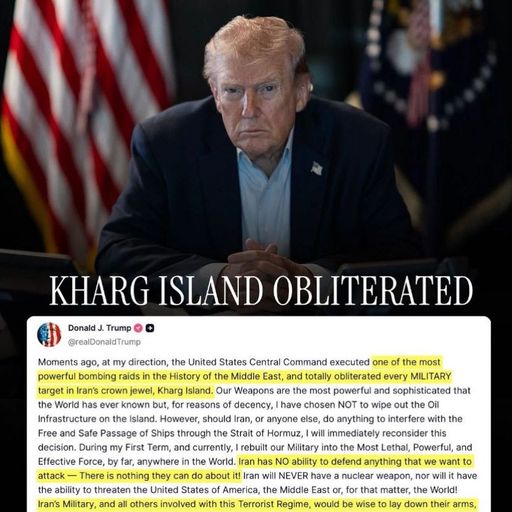
Huatai Securities believes that since the outbreak of the US-Iran conflict on February 28, energy prices have risen sharply, and financial markets have adjusted in an overall orderly manner. However, considering that the Strait of Hormuz was completely blocked for the first time in history and the duration may exceed expectations, the risk of impact approaching historical extremes cannot be ruled out.
Previously, markets assumed the conflict would be quickly resolved. Recently, both the US and Iran have taken further escalation measures, and expectations of higher oil prices with more stickiness have been priced in, causing the forward oil price curve to shift upward. However, panic levels seen during previous high-intensity shocks have not reemerged. Since the “epicenter” and blockages are in the Middle East, this high oil price situation differs from past events. It has not increased oil dollar supply but has largely disrupted the oil dollar cycle, further boosting the dollar and tightening liquidity, putting additional pressure on entities with high dollar loan exposure.
CGS International also believes that the longer the Strait of Hormuz remains closed, the greater the risk of economic turmoil and market pressure. “It is not advisable to take this lightly now,” analyst Lim Siew Khee wrote in a report. “With high stock market valuations and tight credit spreads, continued disruptions could trigger a 10%-15% correction in the stock market.” Although the US government may seek to de-escalate, the risk of escalation remains.
Notably, Mitsubishi UFJ Research & Consulting states that measures by the Trump administration to reopen the Strait of Hormuz may not be very effective.
In a research report, Mitsubishi UFJ said: “From Iran’s perspective, seeking more advantages is entirely reasonable, including pushing up oil prices to cause more pain to the global and US economies.” Additionally, the US Navy has yet to escort ships through the strait, and their public calls for help are somewhat ironic, indicating significant difficulties in doing so.
Mitsubishi UFJ added: “Only when credible ships pass through without incident will shipping and insurance companies be more confident in allowing vessels to transit the strait.”
(Source: Securities Journal)