*The original text comes from Crypto Leaks, an investigation company that broke the news about the scandals in the encryption industry. The first two cases they broke the news were all about ICP being manipulated by capital and maliciously shorted. In the SBF article, Crypto Leaks investigated the market doubts and conditions at that time, and believed that ICP tokens were obviously manipulated before and after listing. As the “spokesperson” of Solana, which will be hot in 2021, SBF has the motivation and ability to destroy the biggest competitor IC network (however, there is no substantive evidence, and there will be no future). *
*This article is an Arkham article, providing a large amount of video evidence that Arkham received sponsorship and published a research report that deliberately discredited ICP. The DFINITY Foundation later cited this article to file a defamation lawsuit against Arkham and The New York Times. The release date is June 9, 2022, and the translator has slightly deleted it. *
Summary of this article:
• Examine Arkham Intelligence’s June 2021 ICP report with spy conversation videos and facts.
• The topic of this report is the IC Network launched by the DFINITY Foundation, and its native token is called ICP.
• At the time, Arkham was a fledgling company without any track record or apparent expertise related to cryptographic research.
• Their only public team member is the founder, Miguel Morel - we were unable to glean any information about him other than a LinkedIn page claiming he was a cryptocurrency investor and helped create a cryptocurrency business called Reserve.
• Arkham ICP reports that when the DFINITY Foundation launched the IC network, there was a “pump and dump” by insiders, which is why ICP prices went up and then down. But they did not provide any substantive evidence.
• The report was posted on Twitter with an accompanying crime documentary style video.
• The report, which should have received no coverage because it was neither objective nor substantive, was mysteriously associated with The New York Times. The New York Times turned its report into a “killer weapon” for DFINITY’s reputation.
• Arkham’s founder, Miguel, claims that the report was not paid.
• However, our collection of spy videos shows that Arkham was commissioned to produce a “defamatory” report on ICP tokens, possibly by a competitor of IC Networks.
• The Arkham ICP report and the New York Times article were subsequently used as the basis for an attack on the DFINITY Foundation.
• After the report was released, the Arkham team moved to a mansion in Chelsea, London, UK, apparently getting a lot of money from somewhere. The video shows a team of bodyguards guarding unidentified cargo entering the mansion.
Investigate Background
The Internet Computer (IC) blockchain will go live on the mainnet on May 10, 2021, developed by a large team at the DFINITY Foundation. People are very excited before the official launch of IC, because IC network is claimed to be able to play the role of “world computer”, which will provide a decentralized alternative to traditional IT, and can support fully on-chain Web3 services, such as social networks.
After the mainnet launch, its native token ICP can be transferred on the network, and cryptocurrency exchanges around the world began to create spot markets where users can trade ICP tokens. At the beginning of the mainnet launch and in the following hours, the price of ICP tokens has remained above $450, and the fully circulated market capitalization has reached $230 billion, which is an undisputed high valuation. Then, the price started to drop.
As of June 28, 2021, the ICP price has fallen to $50, and the fully circulated market cap is $23.5 billion, which can be said to be comparable to other competing networks at the time.
Then, a previously unknown research firm, Arkham Intelligence, led by unknown founder and CEO Miguel Morel, released the Arkham ICP Report.
The basic assertion of the Arkham ICP report is that the DFINITY Foundation is a major contributor to the underlying technology of the IC network, and together with relevant insiders somehow set a higher initial price for the ICP token, which was “conducted” when the token was listed. pump and dump."
However, it is highly unusual for an organization of hundreds of renowned computer science researchers, cryptographers, and engineers to spend years developing a blockchain network only to abandon the vision when mainnet goes live of. Furthermore, the report is riddled with unsubstantiated claims, inaccuracies, and glaring logical fallacies. To any seasoned observer of the cryptocurrency space, this looks very much like market manipulation designed to damage the reputation of DFINITY, the project may be sponsored by a competitor of the IC network or by a financial player looking to short its token .
The Arkham ICP report would not have received much attention, but apparently thanks to New York Times columnist Andrew Ross Sorkin, the report was published alongside an article in The New York Times and a Dealbook newsletter, both of which have publicized the report. By lending credibility to this report, The New York Times has done enormous damage to the reputation of the DFINITY Foundation, its leaders, and the IC ecosystem. Arguably, this resulted in another tens of billions of dollars in devaluation of the ICP token market cap. Why The New York Times chose to promote the Arkham ICP Report is unclear, and it clearly does not deserve to be trusted as a source of information.
By all accounts, the DFINITY Foundation has not sold any ICP tokens in the weeks following the mainnet launch, with the project’s founder, Dom, stating that he has only sold a fraction of the tokens (just 5% of his holdings) . Moreover, simple common sense tells us that if the market price of ICP tokens is too high after the mainnet launch, then in any case, it will naturally fall through normal price discovery without the need for “internal dumping”.

In this article, we explore the people and content behind the Arkham ICP report, as well as The New York Times’ baffling decision to publicize it. As we have shown through spy videos and other means, the deeper the investigation, the more inexplicable the New York Times’ actions seem.
**Why did The New York Times support the Arkham ICP report? **
The New York Times published the article “Cryptocurrencies’ Dramatic Crash Shocks”, and at the same time they published “How ICP’s Proud ICO Crashed” in their Dealbook newsletter, which they also pushed to their subscribers. (Note: After this article was published, the DFINITY Foundation filed a defamation lawsuit against The New York Times and Arkham Intelligence, and The New York Times re-edited the headline to remove the word “1C0”)
In “How ICP’s Proud ICO Crashed,” the New York Times called Arkham Intelligence a credible “crypto analysis firm” and promoted the Arkham ICP report, providing a link to the report. Meanwhile, while Arkham hadn’t published anything before, it hasn’t published anything else after more than a year (as of June 2022).
The New York Times’ “How ICP’s Proud ICO Collapsed” has repeatedly incorrectly referred to the IC network, which is undergoing the mainnet launch, as an “initial coin offering”, or “ICO” (involving an organization selling unavailable tokens to the public). Tokens used to raise research and development funds, with the promise that this would make the tokens usable) — something regulators in many countries have long banned — apparently in an attempt to deliberately discredit the DFINITY Foundation as engaging in illegal activities.
The basic gist of the article can be boiled down to the words of Miguel Morel in a short Twitter video promoting the Arkham ICP report. The video uses the “criminal reveal” soundtrack commonly used in TV series as the background music, and expresses his claim that the DFINITY Foundation and insiders are “guilty”:
Our findings lead us to believe that DFINITY insiders are continually depositing and dumping billions of dollars in ICP tokens on exchanges while others watch their investments dwindle. If the available data in our analysis is accurate, we should propose that the ICP token may be one of the most extreme cases of investor abuse in the history of the cryptocurrency market and financial markets in general. "

Miguel made a clear statement about the “crimes” of the DFINITY Foundation and insiders. Although Arkham Intelligence only had 200 followers on Twitter at the time of publication, this video by Arkham Intelligence has been viewed nearly 20,000 times by May 2022, thanks to The New York Times promoting them, their "viewpoint "It is also famous all over the world.
As we stated in our SBF piece, the Arkham ICP report was likely created with the specific purpose of causing harm to ICP, either by a competitor or a market manipulator looking to short ICP. So why, with its illustrious history and mission of seeking truth on behalf of its readers, The New York Times, and its star reporter Andrew Ross Sorkin, give Arkham the credibility and the reputation it deserves?
From the moment our investigators started collecting spy footage to understand what happened, something went wrong…
Investigate Arkham Intelligence
Arkham Intelligence appears to be named in homage to Gotham Research, a well-known and respected financial research firm. However, we don’t think The New York Times confused the two when it decided to promote Arkham as a credible “crypto analytics firm.” Arkham Intelligence does not have any past records and has only disclosed one employee, Miguel Morel, who also does not have any past records.
Investigating these two points alone raised serious red flags, and we found more serious problems later on.
**Where the hell is the Arkham team? **
They are registered in Delaware, USA, incorporated on March 4, 2021.
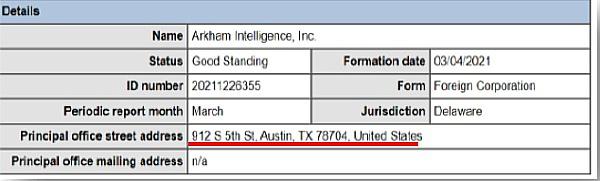
However, this date of establishment does not match their Twitter account, which was created in May 2019, two years ago, suggesting that the account was renamed. Their first tweet appeared on June 28, 2021, the same day the New York Times article was published. This date also doesn’t match Miguel Morel’s LinkedIn profile, which says he joined Arkham in January 2020. But these inconsistencies with dates are just the beginning.
However, for a short time after publishing the ICP report, the Arkhan team was still working from its headquarters, a rural suburb outside Austin, Texas, not the kind of fancy office building you’d hope to find for a respectable research firm. :

But after the ICP report went viral, the small team of a few people moved out of Texas. Maybe they made a lot of money because they moved into a mansion in Chelsea, London, England. According to the original ad, the mansion rented for £32,500, or $43,000 a month.

One might think that “encryption analysis” might be a simple business, but Arkham is registered in all over the United States: Delaware, California, New York, and even Colorado.
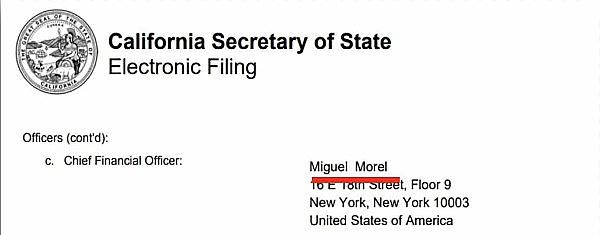
Chelsea’s Arkham
Arkham’s new headquarters in Chelsea, London, houses many of Arkham’s team members or affiliates. Some of the new additions include: Henry Fisher, head of crypto project Reserve and current Arkham CTO; Charlie Smith, former head of business development at Reserve and co-founder of Arkham; Jonah Bennet, journalist and co-founder of an online magazine that hired Several Arkham employees serve as contributors; Zachary Lerangis is Arkham’s current Operations Director; Keegan McNamara is Arkham’s former TPM.
Three things are worth noting.
First off, everyone here is in their early 20s.
Second, Charlie Smith and Keegan McNamara have now left Arkham and are starting new startups, which reflects the fluidity of Arkham’s membership and why it shouldn’t be considered a traditional company.
Third, three of the members are all connected to a “stablecoin” project called Reserve, and Miguel also says he’s a co-founder of that project…
**What is the Reserve program? **
Reserve is not a big tech project like IC Network. Its goal is to provide a “stablecoin” that runs on the Ethereum network. Investors can buy the stablecoin through its RSR token, which has lost more than 96.5% in value since its peak.

Crypto enthusiasts want to see reports written by thoroughly researched, unbiased, and objective professional researchers, not by cryptocurrency entrepreneurs, which can lead to unobjective and inaccurate conclusions. It is especially inexplicable that their own token dropped sharply at the same time as the ICP token, but they presumably would not claim that its price drop was due to insider trading.
Due to the slump in the price of Bitcoin, the price of many tokens fell in response, and this slump began almost from the moment the IC mainnet went live. Between April 14, 2021 and July 20, 2021, BTC fell from $63,314 to $29,807. Its biggest drop began on May 10, 2021, the same day that the IC mainnet went live. However, Arkham’s report completely fails to take into account the impact of BTC on the price of ICP, even though it also caused their own RSR token to drop by 79.4%.
*Even if they had direct experience of how crypto market volatility at the time affected token prices, when Arkham produced the ICP report they mysteriously did not mention these market movements, opting instead to weave a falsehood about DFINITY insider misconduct Narratives are sufficient to prove that their actions were intentional. *
Information about Miguel Morel
At the time of the ICP report, founder and CEO Miguel Morel was the only Arkham employee to be disclosed. At the time, his LinkedIn profile revealed little about his career history and qualifications. Given that the university’s logo has been added to his resume, he appears to have graduated from high school and taken courses at the university. Miguel claimed to be a co-founder of Reserve, but shortly after the publication of the Arkham ICP report, Reserve removed all information about Miguel from their official website.
Although Reserve did not list Miguel as a co-founder when Arkham published the ICP report, their website did include a blog post attributed to Miguel Morel, but it was quickly removed.
While it’s unclear what Miguel Morel meant when he claimed to be Reserve’s “co-founder,” the affiliation reflects his likely pre-existing financial interests in cryptocurrencies, which could make his claim far from be fair and objective.
Clearly, this is not a normal person that The New York Times should trust when it comes to promoting and endorsing an ICP report that could cost billions of dollars.
**Arkham’s ICP report, has it been recharged? **
The New York Times published their article and DealBook newsletter on June 28, 2021 promoting the Arkham ICP report. A few days later, with the IC ecosystem and ICP tokens compromised, Miguel Morel posted his last tweet (as written at the time), claiming that he was not sponsored to write the report, received no compensation of any kind, and He does not own or short ICPs:
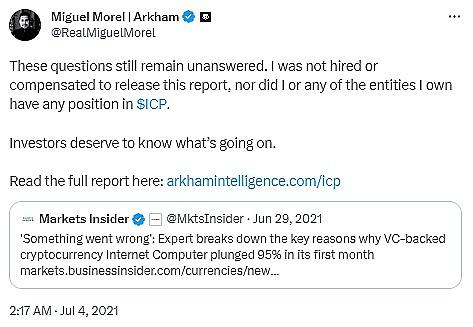
However, in one spy video we collected, Arkham employee Nick Longo stated that he believed the client had paid to produce the report (interested readers can go to the original article to view the video,
Useful dialogue from this video:
Nick: This (ICP report) was a great opportunity to get noticed, so we published it. I remember a customer paid
Mysterious Man: (pay) to investigate ICP?
Nike: ICP is the first, there are other encryption projects

Johan Bennett was more forthright about Arkham’s reasons for producing the ICP report.
You-Know-Who: What can Arkham get out of this?
Johan: They charge for the meeting report, they are hired to do it. That’s how they make money.
Johan: I think they were hired specifically to do this, certainly not this one out of so many blockchains. I think it was hired by disgruntled users or investors.
Mystery Man: In the case of Arkham, could the NYT somehow generate revenue by publishing articles? Or for the common good?
Johan: No, I think they were hired by the client to write it.

Video evidence suggests that the report was sponsored to attribute the ICP price drop to the DFINITY Foundation and “insiders” involved in the ecosystem. The report just grabs a few large ICP deals at random and then claims, with no other evidence, that these were insider shipments. The report never questioned why the initial price of ICP was so high, nor did it explain why the price was so high that it did not naturally fall.
Not only does the report look like it might have been created for paying customers, but its strong claims are deliberately made without a reasonable basis:
Nick: We’ve done some research for clients, like ICP, and basically deduced who owns these wallets, but those are just inferences… insiders sold all the tokens, we didn’t… …
You-Know-Who: Evidence?
Nick: yes

Arkham’s investor is Tim Draper
Tim Draper is a well-known American billionaire with a large cryptocurrency portfolio. His investment in cryptocurrencies started with a large holding of Bitcoin and later expanded to emerging projects such as Ripple, BCH, Tezos and Aragon. His son Adam Draper “inherited” his ambitions, holding a large number of cryptocurrencies such as Bitcoin, Monero, and Ethereum through his own venture capital fund Boost VC. For the Draper family, the IC Network and the DFINITY Foundation may be seen as a direct threat to their family estate, as the innovative IC Network can be seen as a direct competitor to all common blockchains.
Nick: We had some angel investors at the time?
Mysterious Man: Can you tell me your name?
Nick: Most importantly Tim Draper.

Miguel Morel publicly claimed that the Arkham ICP report was unsponsored and produced for the crypto community. However, not only does it look like it could have been commissioned by an unknown party for unknown reasons, but as Nick Longo reveals below, it was made using Tim Draper’s funds:
Nick: While focusing on ICP (reporting)… we raised a lot of money, a Series A, several million dollars, and we still had some money left over from the original angel investors .

SUSPECTABLE ACTIVITY AT ARKHAM’S CHELSEA HQ
The Arkham team moved from their rural Texas home to their mansion in Chelsea after publishing the ICP report, but something interesting happened. A travel bag full of goods arrived at the villa, containing an unknown cargo. Miguel’s handbag is sometimes carried by a security guard, but always accompanied by a security guard, who nervously checks back and forth on the road until they are brought into the house:



Arkham has caused multiple damages to the IC ecosystem
We found that parties in many cases believed Arkham’s story simply because they felt the New York Times endorsed it, and then directly took offensive actions that harmed the IC ecosystem, adding to the reputational damage. This extends to class actions, one of which looks like this:

Investigation Summary
As this investigation demonstrates, The New York Times has greatly misled crypto enthusiasts by describing Arkham as a respected “crypto analytics firm.” Not only does Arkham seem to lack the skills needed to write a professional report, but almost every aspect of the organization is highly suspect. While the investigation into this case has brought the world smoking guns, even a basic, cursory look at the group would reveal that they are not to be trusted, from the oddly misplaced dates on their profiles , to the fact that there is absolutely no historical record of them or their founders on the internet.
Endorsing Arkham and its report in this way could reduce the market value of ICP tokens by several billion dollars. As we have shown, reports that Arkham may be paid by a competitor or someone shorting ICP, and that the company’s main investors are also investing in blockchains that compete with IC Networks. While misrepresentation can please customers and can please their key investors, the result clearly damages the reputation of the IC ecosystem and harms the interests of ICP holders.
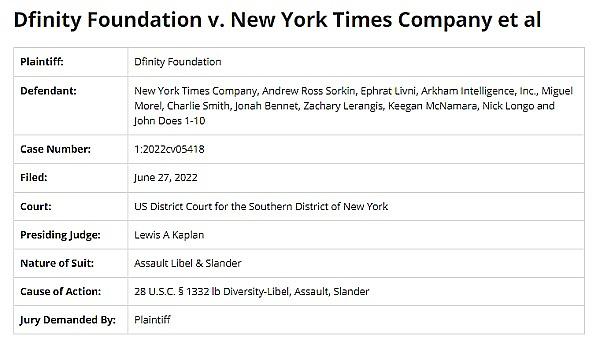
Within two weeks of publishing the article, the DFINITY Foundation sued the New York Times and all team members of Arkham Intelligence through the U.S. District Court for the Southern District of New York for attacks and defamation. In the end, the DFINITY Foundation won the case.
risk warning:
According to the “Notice on Further Preventing and Dealing with the Risk of Hype in Virtual Currency Transactions” issued by the central bank and other departments, the content of this article is only for information sharing, and does not promote or endorse any operation and investment behavior. Participate in any illegal financial practice.


