MAP Ecosystem
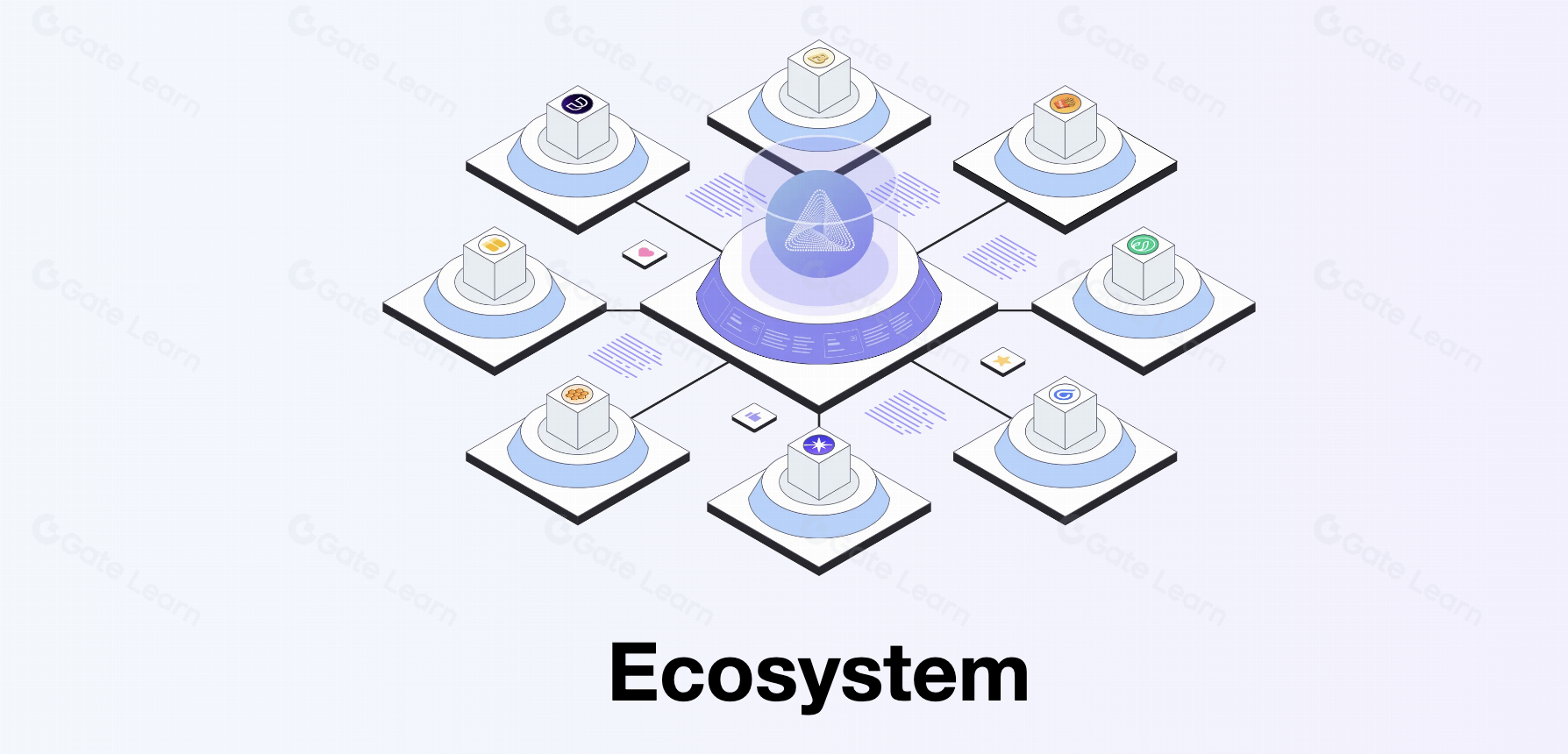
The MAP Protocol ecosystem provides comprehensive support for decentralized applications (dApps) through its powerful three-tier architecture. This includes the MAP Protocol layer, the MAP Full-Chain Service (MOS) layer, and the MAPO application ecosystem layer. Each layer plays a crucial role in promoting cross-chain interoperability and ensuring secure, efficient, and scalable operations.
MAP Protocol LayerThis is the core infrastructure that includes the MAP relay chain and light client. The MAP relay chain uses Proof of Stake (PoS) mechanism and Byzantine Fault Tolerance (BFT) consensus to ensure security and efficiency. The light client is deployed on each chain, verifying transactions by storing minimal data such as block headers and using cryptographic proofs like Merkle proofs.
MAP Full Chain Service (MOS) layerThe middleware connects the underlying protocol mechanism with the dApp interface, providing basic services such as AssetVault for managing cross-chain asset transfers, and message passing programs for transmitting cross-chain messages. MOS simplifies the development of cross-chain dApps by providing pre-built components and tools.
MAPO application ecosystemThis layer supports a wide range of dApps, enabling them to operate seamlessly across multiple blockchains. It includes functions such as cross-chain lending, full-chain exchange, GameFi, and on-chain oracles. This layer ensures that dApps can efficiently and securely manage data and assets across chains.
The MAP protocol has established various strategic partnerships and integrations to expand its ecosystem and enhance its interoperability. Here are some noteworthy collaborations:NEAR Protocol: MAP Protocol has partnered with NEAR Protocol to drive cross-chain interoperability solutions powered by artificial intelligence (AI). The collaboration aims to combine the strengths of both platforms to create more robust and scalable cross-chain applications.
Conflux: The partnership with Conflux enables seamless peer-to-peer connections between different Bitcoin Layer 2 (L2) solutions and popular public chains. This collaboration enhances the interoperability of the MAP Protocol ecosystem by facilitating seamless communication between blockchain networks.
NVIDIA Developer Program: Joining the NVIDIA Developer Program marks an important step in leveraging AI to enhance blockchain interoperability. The integration is expected to facilitate the development of cross-chain interoperability solutions within the Bitcoin ecosystem and beyond.
巴比伦: MAP Protocol has formed a strategic alliance with Babylon to improve Bitcoin staking security and interoperability. The collaboration aims to provide a secure foundation for cross-chain applications and further strengthen MAP Protocol's position in the blockchain space.
These partnerships and integrations are crucial for expanding the MAP Protocol ecosystem, enabling it to provide more comprehensive and secure cross-chain solutions. By collaborating with leading blockchain projects and leveraging cutting-edge technology, MAP Protocol aims to drive innovation and adoption in the Web3 ecosystem.
Summary
The MAP Protocol ecosystem is a powerful multi-layer infrastructure designed to support a wide range of decentralized applications. Its strategic partnerships and integrations enhance its capabilities, making it a key player in developing interoperable blockchain solutions. By continuously expanding and strengthening its ecosystem, MAP Protocol is committed to driving innovation and application of decentralized technologies, building a truly interconnected Web3 ecosystem.
Decentralized applications (dApps) based on the MAP protocol
BarterSwapBarterSwap is a decentralized cross-chain exchange based on the MAP protocol. It enables users to exchange any tokens on different blockchains without the need for intermediary tokens, thereby reducing costs and increasing transaction speeds. BarterSwap supports multi-chain liquidity pools, allowing users to provide liquidity for token pairs from different chains, such as Ethereum and BSC, in one pool. This feature significantly improves the efficiency and user experience of cross-chain exchanges.
Full-chain GameFi projectGameFi projects based on the MAP protocol deploy their tokens on multiple chains to expand their user base and enhance the gaming experience. By using the MAP protocol, these projects ensure the security and efficiency of cross-chain asset transfers, which is crucial for maintaining the in-game economy and user engagement. An example is the GameFi project deployed on the Polygon and WAX chains, which allows players to seamlessly transfer assets.
On-chain Oracle and DerivativesThe MAP protocol supports decentralized derivatives and synthetic assets through its on-chain oracle service. These oracles ensure the accuracy and timeliness of asset prices and quantities, which is crucial for derivative trading. By integrating these services, dApps can build powerful financial products that rely on accurate cross-chain data.
HiveSwapHiveSwap is a decentralized exchange (DEX) that operates on a single blockchain. Despite recent declines, HiveSwap remains an important participant in the MAP protocol ecosystem, providing efficient and secure trading services for a variety of digital assets. Its main function is to facilitate seamless asset exchanges within its supported chains, improving liquidity and user experience.
StaQStaQ focuses on liquid staking, allowing users to stake assets and earn rewards without fully locking them. This enables users to maintain liquidity while participating in the staking process. The integration of StaQ with the MAP protocol enhances its security and efficiency, providing users with a powerful staking solution.
Butter Network Spanning 10 blockchains, Butter Network provides a cross-chain solution that facilitates seamless asset transfers between different blockchains. It leverages the interoperability features of the MAP protocol to provide a reliable and efficient cross-chain interaction platform, making it a key player in the MAP ecosystem.
SatsatSatsat is a farming dApp that allows users to earn rewards by providing liquidity. It operates on a single chain, leveraging the secure infrastructure of the MAP protocol to ensure efficient and secure farming operations. Satsat aims to provide maximum returns for users through strategic liquidity.
Meson Spanning 41 blockchains, Meson offers a wide range of cross-chain services. It facilitates the transfer of assets between different blockchain networks, leveraging the capabilities of the MAP protocol to ensure that transactions are secure and efficient. Meson is essential for users who want to move assets seamlessly between various chains.
Pu239Pu239 focuses on lending services within the MAP protocol ecosystem. Despite its small scale, it offers unique lending opportunities that allow users to borrow assets securely. Pu239 benefits from the powerful security features of the MAP protocol, ensuring the safety and reliability of all lending operations.
LessGasLessGas aims to reduce transaction costs within the MAP protocol ecosystem. By optimizing gas fees, it ensures that users can trade more efficiently and economically. LessGas leverages the technology of the MAP protocol to provide an economically efficient solution for all users.
Through the development and deployment of these dApps, the MAP protocol has demonstrated its strong ability to promote decentralized application innovation and cross-chain interoperability, building a diverse and powerful ecosystem.
Products & Services
MAP Full-Chain Service (MOS)
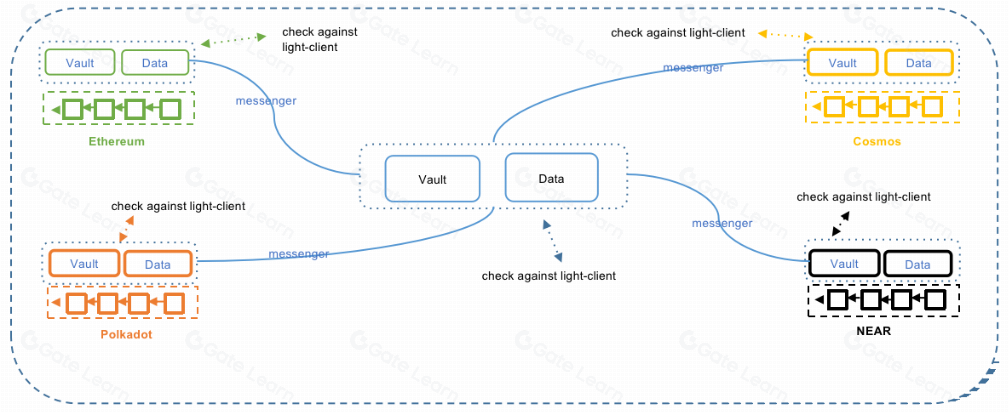
MAP Full-Stack Service (MOS) is a key layer in the MAP protocol architecture, serving as middleware that connects the underlying protocol mechanism with dApp interfaces. This service layer provides essential components and tools for the development and deployment of cross-chain decentralized applications (dApps). MOS includes the following components:
- Insurance Pool and Data ManagementThese components securely and trustlessly manage cross-chain asset transfers, handle asset minting, burning, and transfer operations, and operate based on cryptographic proofs.
- Message Delivery ProgramThe program facilitates the transfer of cross-chain messages and updates the light client with the latest block header information to ensure the correct verification and execution of cross-chain transactions.
- Developer ToolsMOS provides a comprehensive Software Development Kit (SDK) and Application Programming Interfaces (APIs) that simplify the process of building and deploying cross-chain dApps. These tools assist developers in creating applications that can interact with multiple blockchains without the need for extensive custom integration.
Developer SDK and API
The MAP protocol provides a powerful SDK and API suite designed to enable developers to easily create and deploy full-chain applications. These toolkits include:
- Butter SDKThe SDK helps developers integrate cross-chain functionality into their dApps with minimal coding effort. It supports multiple chains, making it easier for developers to build interoperable applications.
- Atlas JSON RPCThis is a powerful tool that allows developers to interact with the MAP relay chain using JSON RPC calls. It provides a standardized way to communicate with the blockchain and supports seamless integration of cross-chain functionality.
- Atlas Consensus API: This API allows developers to interact with the consensus layer of the MAP Relay Chain, providing functions such as validating transactions, querying block data, and more.
- MAP Scanning API: This API provides developers with tools to access and analyze blockchain data on the MAP protocol network, including functions such as querying transaction history and block details.
In addition to the core SDK and API, the MAP protocol also provides a variety of other tools and resources to support developers:
- Documentation and TutorialsProvide comprehensive guides and tutorials to help developers effectively use the SDK and API. These resources cover various aspects from beginner to advanced usage scenarios.
- Developer community and supportThe MAP protocol has nurtured a strong developer community where developers can share knowledge, seek help, and collaborate on projects. The community is supported by forums, chat groups, and regular updates from the MAP protocol team.
- Integration GuideProvide detailed integration guides to help developers connect their dApps to various blockchain networks using the MAP protocol. These guides cover the technical aspects of integration and offer best practices for secure and efficient cross-chain interactions.
By providing these comprehensive products and services, the MAP protocol aims to lower the entry barriers for developers and facilitate the creation of innovative cross-chain applications. Combined with a powerful SDK and API, the MOS layer provides a solid foundation for building the next generation of decentralized applications.