ChenIsThin

vip
Age 4.3 Year
Peak Tier 0
Trend positioning | Chart analysis | Sharing quality altcoins | Web3 enthusiasts | Passionate about researching new things | Using compound interest to outperform the market, even if it's just a little each time.
Tokenization was once the main narrative of DeFi, but a recent CoinDesk article pointed out: simply tokenizing real-world assets has limited effect, akin to a PDF with a ticker, and is not the ultimate goal.
The industry is shifting from the first stage of asset tokenization to the second stage of yield markets, separating yields from principal, making them independent, tradable, and composable tools.
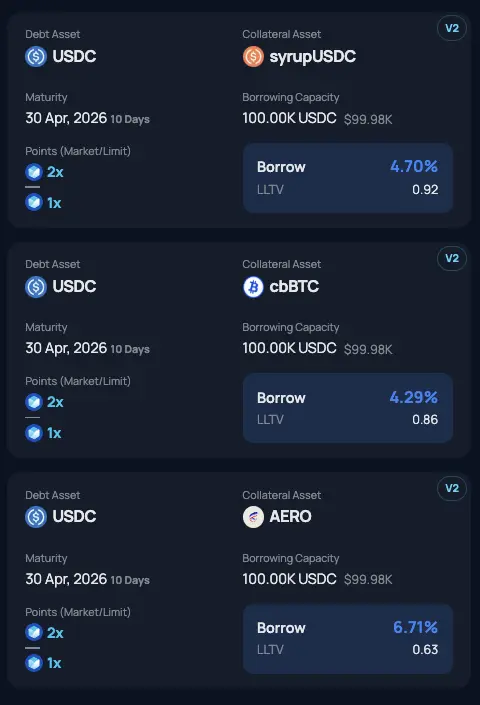
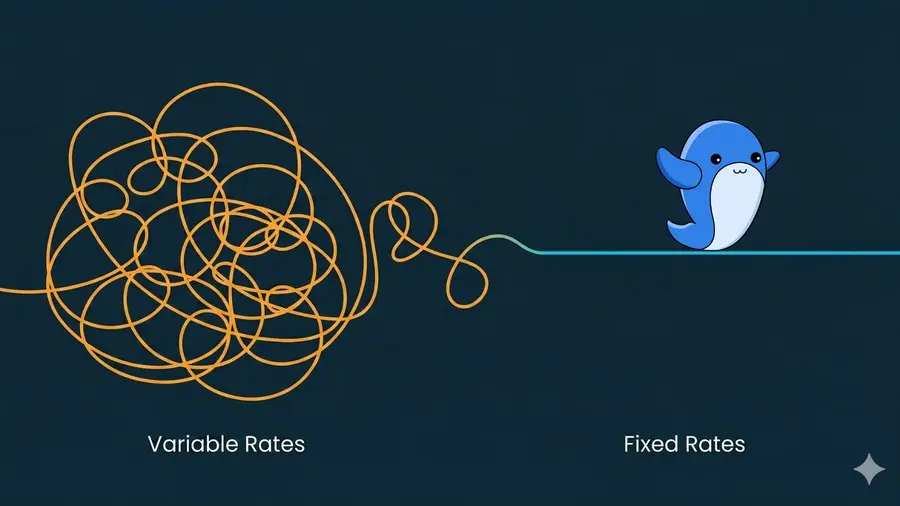
Most traditional DeFi lending protocols use floating interest rates, lack a clear term structure, cannot accurately price duration, and struggle to hedge interest rate risk effectively, leadi
USDG-0.01%
SPYON-0.44%
View Original
post-image
post-image
  • Reward
  • Comment
  • Repost
  • Share
Will institutions really enter DeFi on a large scale? I used to be skeptical.
It's not a technical issue, but a language barrier. Institutions make decisions based on maturity, cash flow, risk hedging.
DeFi hasn't provided these before—floating APY, unlimited liquidity—making it basically impossible for fund managers to record transactions.
What institutions want is not the "tokenized assets" label, but on-chain tools that can be priced, traded, and risk-managed like bonds.
@TermMaxFi's approach, simply put, involves a few things:
1⃣ Making RWA into qualified collateral: institutions
View Original
post-image
  • Reward
  • Comment
  • Repost
  • Share
I see that Quip Network @quipnetwork's testnet has recently gone live, and I have some thoughts.
D-Wave's Advantage2™ quantum computer has already demonstrated faster and more energy-efficient performance than traditional classical computers in scenarios like logistics, manufacturing, and financial modeling. Quip Network introduces this quantum computing capability into blockchain, allowing participants to contribute computing power by solving real optimization problems and earn QUIP rewards, rather than just competing on hash rate.
This makes me think that blockchain computation might gra
View Original
post-image
  • Reward
  • Comment
  • Repost
  • Share
The matter of robots going on the blockchain, @StrikeRobot_ai team explained it quite clearly. Simply put, robots are no longer just performing tasks; they can settle transactions themselves, trade independently, and make payments on their own.
The current issue is that robot technology is already very mature—robots can inspect factories, deliver goods, perform surgeries—but they cannot directly participate in economic activities.
If two robots want to exchange data, human approval is still required in the middle; even if a robot earns money, it cannot reinvest on its own. Essentially, the
VIRTUAL-2.69%
View Original
post-image
  • Reward
  • Comment
  • Repost
  • Share
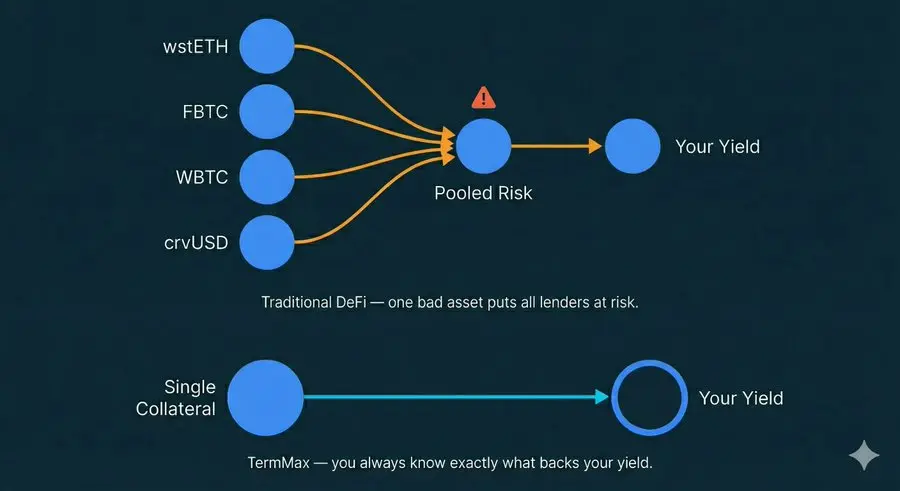
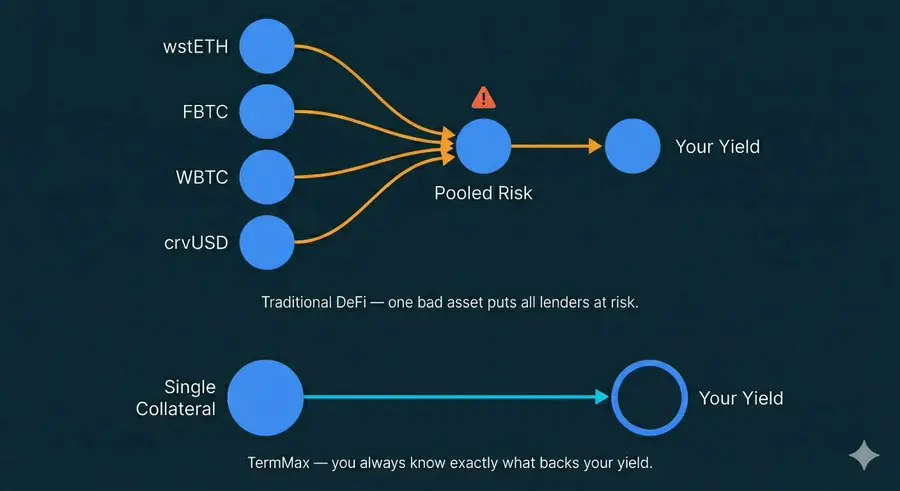
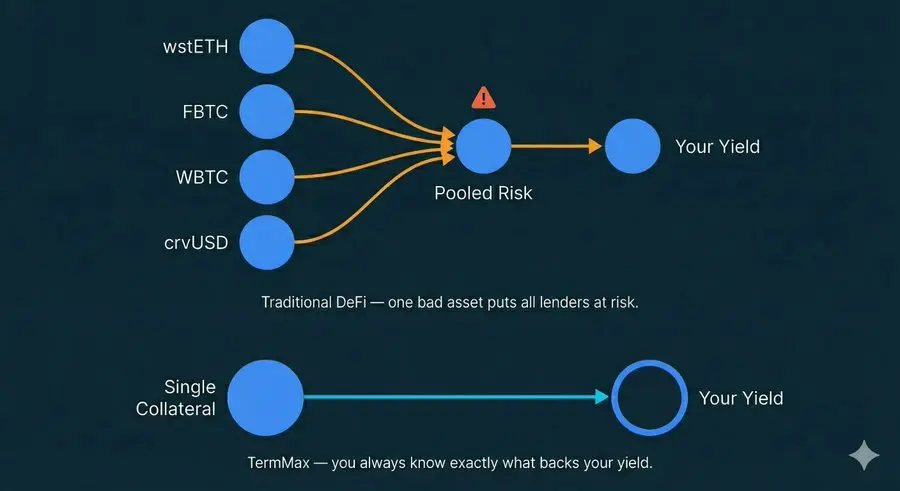
Share an often-overlooked risk: when you deposit USDT or ETH expecting stable returns, do you truly understand what assets are backing your funds?
Many mainstream lending protocols use a pooled collateral model, where all users' collateral is combined into one big pool, and borrowers can use various tokens as collateral, including high-risk assets you may not be familiar with or willing to accept.
If one of these assets experiences a severe crash or insufficient liquidation, the entire pool's lenders often have to share the losses. This is not a bug in a specific protocol but a systemic ex
ETH-3.32%
View Original
post-image
  • Reward
  • Comment
  • Repost
  • Share
Traditional finance has been offering fixed interest rates for hundreds of years, and the mechanism is already very mature.
DeFi has chosen a different path, mainly using variable interest rates, over-collateralization, and automatic execution through smart contracts.
This design aims to maximize decentralization and transparency, but in practical use, it also introduces planning uncertainties caused by interest rate fluctuations, which to some extent creates a trust gap between TradFi and DeFi.
Many institutions and conservative investors still find it difficult to see DeFi as a mature
View Original
post-image
  • Reward
  • Comment
  • Repost
  • Share
Quip Network @quipnetwork is a distributed computing platform developed by Postquant Labs, aiming to combine quantum computing with classical computing resources to build a globally shared quantum computing network. The project is supported by Portal Ventures and OrangeDAO, and currently has more than 137,000 followers on X.
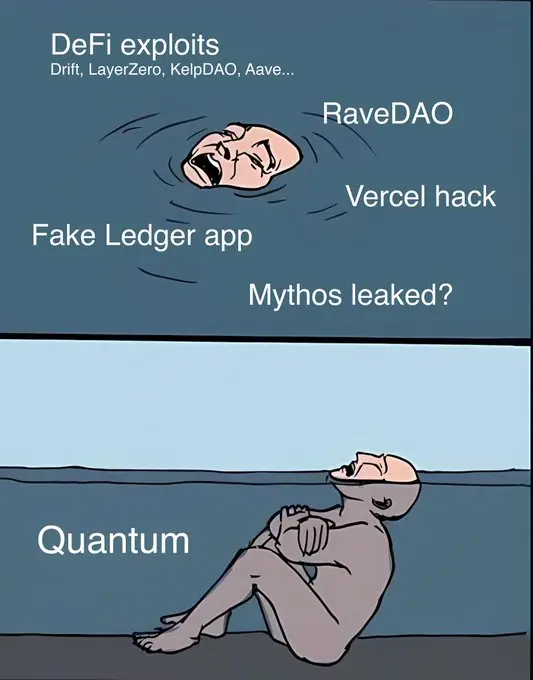
Quip Network co-founder Colton Dillion said that quantum computers may crack today’s Bitcoin-level encryption algorithms with a certain probability before 2028, and this risk has prompted the project to explore post-quantum security solutions.
In the asset layer, Quip
BTC-1.45%
View Original
post-image
  • Reward
  • Comment
  • Repost
  • Share
One of the core components of the traditional financial system is the massive fixed income market. Government bonds, corporate bonds, mortgages, and the long-term investment portfolios of insurance companies all rely on predictable fixed interest rates.
Institutional investors need cash flows that can be precisely planned. They must provide clear yields to beneficiaries or regulators, and be prepared for long-term asset-liability matching.
DeFi’s main current shortcoming is the lack of reliable fixed interest rate products. Although variable interest rates enable decentralized lending, it’
View Original
post-image
  • Reward
  • Comment
  • Repost
  • Share
Monday, Blue V Mutual Follow
As long as you are also a Blue V, say something in the comments
Follow back when I see it
#BlueVMutualFollow
View Original
post-image
  • Reward
  • Comment
  • Repost
  • Share
Due to a recent security incident involving Kelp DAO, the River project has proactively paused the cross-chain bridge functionality for satUSD and RIVER today, and will restore it after the review is completed.
Here are a few of the situations everyone is most concerned about:
1. All users’ assets are safe. River’s funds and contracts have not been affected.
2. Only the cross-chain bridge is temporarily unavailable. All other functions are working normally, including transfers and transactions on each chain, as well as transfers of assets within a single chain, which are not affected.
3. The t
View Original
post-image
  • Reward
  • Comment
  • Repost
  • Share
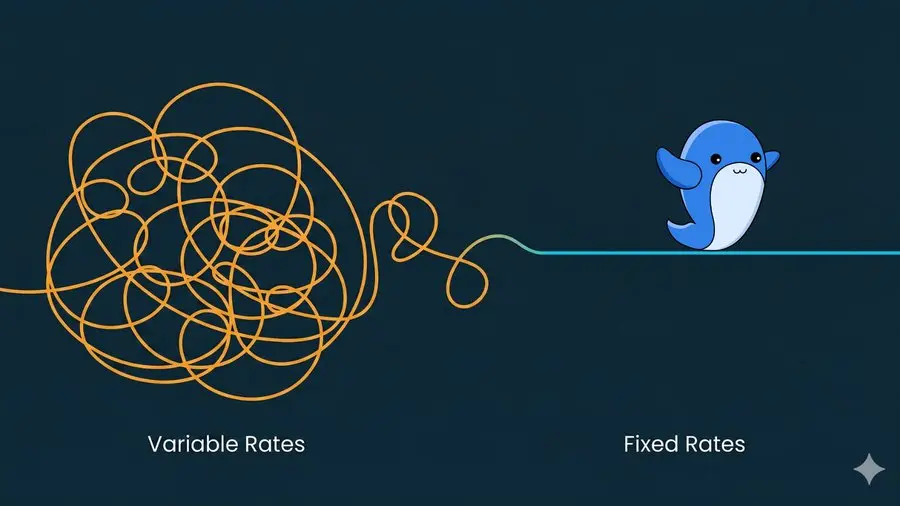
I believe many people have encountered this situation: you deposit 10,000 USDC into Aave or Compound, and yesterday you could earn an 8% APY, planning to use these earnings to supplement your life or continue investing.
As a result, when utilization drops the next day, the yield directly falls to 3.5%.
The original plan is suddenly disrupted, and it's natural to feel uneasy.
The same applies when borrowing—taking out ETH for leveraged trading, with interest rates initially at 5%, but suddenly rising to 20% due to increased pool utilization, increasing liquidation risk, and potentially ca
USDC-0.01%
ETH-3.32%
View Original
post-image
  • Reward
  • Comment
  • Repost
  • Share
Just a couple of days ago, @RiverdotInc announced that all the rewards for the Hyperliquid Phase 1 Deposit & Hold event have been distributed.
A total of 150,000 River Points and 1,500 $RIVER tokens were given out to 211 eligible addresses.
The distribution was fairly quick, and a leaderboard link was provided for participants to check their rankings.
Rewards were calculated based on an average holding balance with weighted consideration; those with larger holdings received more. Additionally, although the Deposit & Hold event has ended, trading competitions and creator activities are s
View Original
post-image
  • Reward
  • Comment
  • Repost
  • Share
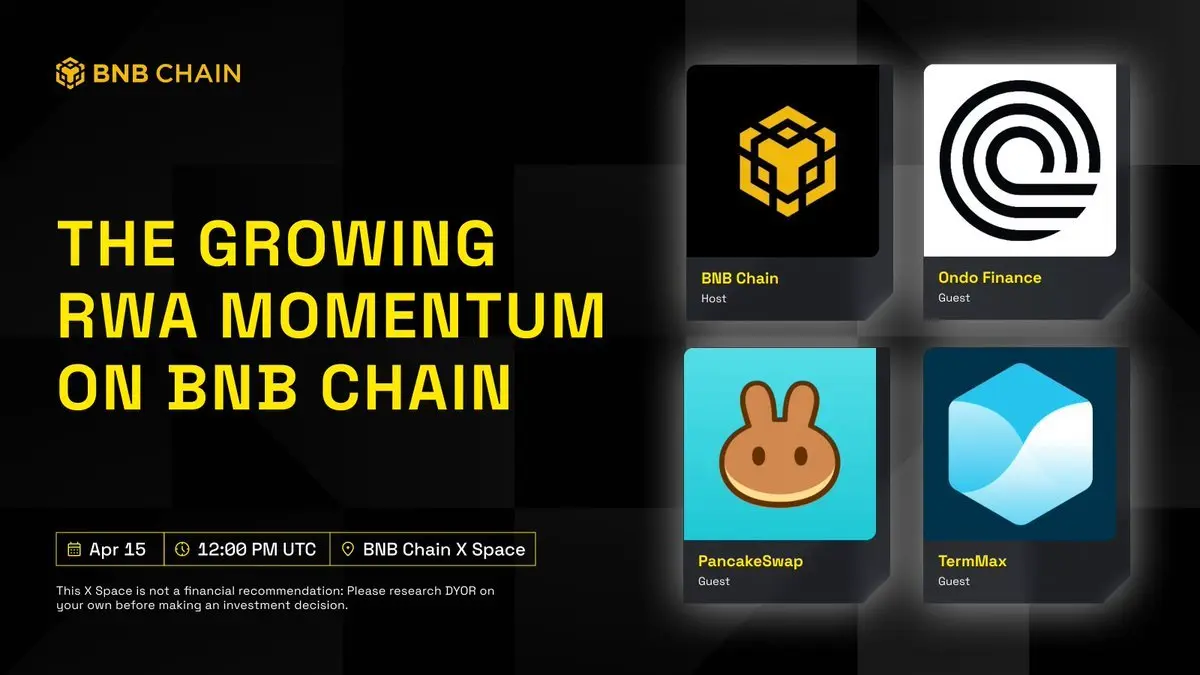
Seeing TermMax × Ondo Finance collaborate to launch, providing fixed interest rate lending for RWA; currently, the TVL of RWA on BNB Chain has exceeded 3.5 billion dollars, with on-chain holders exceeding 43,000.
@TermMaxFi and Ondo Finance have recently reached a partnership, allowing this scale to begin transforming into real financial efficiency. With TermMax, tokenized U.S. stocks issued by Ondo Global Markets can be used as assets to lend USDT at a fixed annualized interest rate of 2.90%-4.23%, with optional terms of 14 days, 45 days, or 75 days.
The main functions include:
1⃣ Insti
ONDO-2.34%
BNB-1.27%
View Original
post-image
  • Reward
  • Comment
  • Repost
  • Share
Confident in the long-term trend of stocks like NVDA, TSLA, but what to do if you need funds in the short term?
Previously, common approaches were to sell holdings or accept floating interest rates and the potential risk of liquidation.
Now, TermMax offers a third way:
Collateralize Ondo tokenized stocks into TermMax to borrow USDT at a fixed interest rate of 2.90%-4.23%. You can continue holding the stocks, enjoy their appreciation, and also access liquidity.
Supported durations include:
1⃣14 days: suitable for short-term cash flow needs
2⃣45 days: suitable for mid-term strategy a
ONDO-2.34%
BNB-1.27%
View Original
post-image
  • Reward
  • Comment
  • Repost
  • Share
  • Pin