Die New York Times veröffentlichte kürzlich eine Untersuchung, in der sie David Sacks, den sogenannten „KI- und Krypto-Zaren“ des Weißen Hauses, beschuldigt, während seiner Zeit als besonderer Regierungsangestellter Richtlinien gefördert zu haben, die seinen Technologie- und Krypto-Investitionen zugutekommen könnten. Obwohl er zuvor angegeben hatte, mehr als 200 Millionen US-Dollar an Beteiligungen verkauft zu haben, darunter etwa 85 Millionen US-Dollar an persönlichen Vermögenswerten, hebt die NYT hervor, dass er laut Finanzbericht 708 Technologieinvestitionen behielt, davon 449 im Bereich KI.
NYT wirft Sacks vor, 708 Investments nicht vollständig abgestoßen zu haben
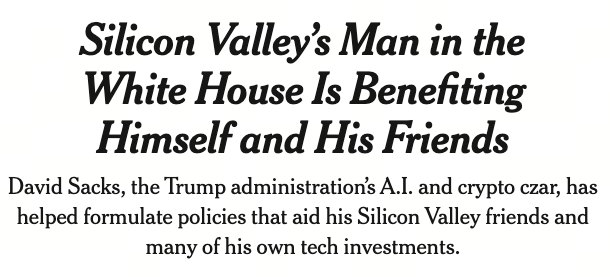
(Quelle: New York Times)
Laut New York Times war Sacks als Mitgründer von Craft Ventures in großem Umfang in KI- und Krypto-Beständen investiert, darunter mindestens 20 Investments, die mit Krypto-Assets in Verbindung stehen. Solche Investmentvolumina sind im Silicon Valley nicht ungewöhnlich, doch wenn Investoren gleichzeitig hohe Regierungsämter bekleiden, wirft dies Fragen zu Interessenkonflikten auf. Der Kernpunkt der NYT: Sacks könnte beim Vorantreiben von KI- und Krypto-Politik von seinem eigenen Portfolio profitiert haben.
Obwohl er zuvor behauptete, Beteiligungen im Wert von mehr als 200 Millionen US-Dollar verkauft zu haben, darunter etwa 85 Millionen US-Dollar an persönlichen Vermögenswerten, betont die NYT, dass laut Finanzbericht 708 Technologie-Investments verblieben – darunter 449 im KI-Bereich. Diese Zahl ist beachtlich und verdeutlicht die starke Konzentration von Sacks’ Portfolio auf die Bereiche, für deren Regulierung er mitverantwortlich war. Kritiker stellen deshalb infrage, ob er während seiner politischen Tätigkeit finanzielle Interessen nicht vollständig abgestoßen hat.
Die NYT-Untersuchung hinterfragt zudem die tatsächliche Transparenz von Sacks’ Anwesenheit und Engagement. Als kurzfristig eingesetzter besonderer Regierungsangestellter darf Sacks jährlich nicht mehr als 130 Tage tätig sein, doch laut Bericht könnten tatsächliche Arbeitstage und politische Einflussnahme diesen Rahmen überschritten haben. Die Debatte zielt auf ein grundlegenderes Problem: Wird der Status als „Special Government Employee“ genutzt, um strengere Regeln zu Interessenkonflikten zu umgehen?
Kernpunkte der NYT-Anschuldigung
Investitionsvolumen: 708 Technologie-Investitionen, davon 449 mit KI-Bezug
Nicht vollständige Abstoßung: Trotz Verkaufs von 200 Mio. US-Dollar weiter zahlreiche relevante Assets gehalten
Politische Voreingenommenheit: KI- und Krypto-Politik könnte seinen Investments genutzt haben
Transparenzdefizite: Anwesenheit und Beteiligung an politischen Entscheidungen nicht vollständig offengelegt
Der Bericht unterstreicht auch Sacks’ enge Verbindungen zu diversen KI-Unternehmen und fordert mehr Transparenz, insbesondere angesichts seiner Schlüsselrolle bei Chip-Exportpolitik, internationalen KI-Chip-Transaktionen und der strategischen Positionierung von Silicon Valley. Diese Mehrfachrollen erhöhen das Risiko von Interessenkonflikten, da politische Entscheidungen zahlreiche Branchen gleichzeitig betreffen könnten.
Aus Sicht der journalistischen Ethik basiert der NYT-Bericht auf öffentlich zugänglichen Finanzdokumenten und Interviews und verwendet weder anonyme Quellen noch unbestätigte Informationen. Dennoch steht die Stringenz der Schlussfolgerungen zur Debatte: Während die NYT allein die Existenz von 708 Investments als potenziellen Interessenkonflikt wertet, argumentiert Sacks, dass die Einhaltung der Ethikregeln und der Verkauf der geforderten Assets ihn von jeglichem Fehlverhalten entlasten.
Sacks wehrt sich vehement und beauftragt Anwälte gegen Medienfälschungsvorwurf
Sacks reagierte umgehend auf X (ehemals Twitter) und warf der NYT vor, „eine Reihe von Geschichten ohne Beweiswert zu verknüpfen“ und den Bericht als „substanzlose Sensationsmache“ zu betreiben. Er konterte, die NYT habe in den letzten fünf Monaten mehrfach verschiedene Vorwürfe präsentiert, diese nach Widerlegung jeweils durch neue ersetzt und stütze sich auf „vereinzelte Einzelfälle“, die die Überschrift nicht rechtfertigen.
Diese Verteidigungsstrategie zeigt Sacks’ starke Ablehnung gegenüber der Medienuntersuchung. Er sieht in der NYT-Vorgehensweise eine „Salamitaktik“, bei der nach jeder Widerlegung ein neuer Angriffspunkt gesucht werde. Für Sacks handelt es sich um eine tendenziöse, gezielte Kampagne statt um objektive Berichterstattung.
Sein Sprecher betonte, Sacks habe alle Ethikrichtlinien der Regierung eingehalten, die geforderten Vermögenswerte verkauft und vor Amtsantritt im Weißen Haus zwei Ethikbescheinigungen erhalten, jeweils für KI und Krypto. Die NYT zitiere viele unvollständige Informationen und lege nahe, dass bereits abgestoßene Investments mit aktuellen Aufgaben vermischt würden. Der Kern der Verteidigung: Solange der vorgeschriebene Ethikprozess eingehalten wurde, könne kein Interessenkonflikt vorliegen.
Sacks beauftragte die bekannte US-Verleumdungskanzlei Clare Locke mit einer formellen Abmahnung an die NYT. Darin wird der Zeitung „vorgefertigte Schlussfolgerungen“ und die „vorsätzliche Ignoranz“ seiner Ethikdokumente und offiziellen Antworten vorgeworfen. Das Schreiben bemängelt, die NYT deute fälschlich an, Sacks habe keine KI-bezogene Ethikgenehmigung und nutze seine Stellung, um Investments zu begünstigen, obwohl diese laut Vorgaben längst verkauft seien.
Die Anwälte kritisieren zudem, mehrere vom Bericht angeführte Vorfälle existierten „überhaupt nicht“ und fordern die Zeitung auf, die Berichterstattung zu überdenken. Bemerkenswert: Das Schreiben fordert keinen Widerruf, sondern verwendet das seltene Wort „Abandon“ („aufgeben“), was für Diskussionen sorgt. Rechtsexperten weisen jedoch darauf hin, dass eine solche Forderung im Journalismus wenig Substanz hat und nicht den klassischen Verleumdungsstandards entspricht. Clare Locke ist eine der renommiertesten US-Kanzleien für Verleumdungsrecht, die in hochkarätigen Medienfällen aktiv ist – und unterstreicht damit Sacks’ Ernsthaftigkeit.
GENIUS-Gesetz und BitGo-Investment im Fokus der Kontroverse
Unter den von der NYT hervorgehobenen Konflikten sorgt vor allem das Regulierungswerk für Stablecoins, der „GENIUS Act“, für Schlagzeilen. Craft Ventures hält 7,8 % an BitGo, das einen Börsengang anstrebt und „Stablecoin-as-a-Service“ anbietet. Der Bericht wirft Sacks vor, das Gesetz aktiv zu unterstützen und so BitGo indirekt zu begünstigen.
Die Argumentationskette: Sacks hält BitGo-Anteile → treibt GENIUS-Gesetz zur Stablecoin-Regulierung voran → BitGo profitiert als Dienstleister von klaren Regeln → Sacks’ Investment gewinnt an Wert. Oberflächlich wirkt das stimmig. Sacks betont jedoch, der GENIUS Act sei ein parteiübergreifendes Gesetzesvorhaben, das nicht von ihm allein abhänge und einen Rahmen für die gesamte Branche schaffe – nicht maßgeschneidert für BitGo.
Komplexer ist die Frage, ob Sacks seine BitGo-Anteile schon verkauft hat. Nach Angaben seines Sprechers seien alle geforderten Investments abgestoßen worden, doch die NYT zweifelt an Zeitpunkt und Vollständigkeit der Verkäufe. Sollte Sacks nach seinem Amtsantritt noch Anteile gehalten haben, wäre der Interessenkonflikt deutlicher; erfolgte der Verkauf fristgerecht, ginge der Vorwurf ins Leere.
Darüber hinaus hebt der Bericht Sacks’ enge Verbindungen zu KI-Unternehmen und seine zentrale Rolle bei Chip-Exportpolitik, internationalen KI-Chip-Transaktionen und Silicon-Valley-Strategien hervor. Chip-Exportregeln sind für die KI-Branche entscheidend: Sollte Sacks bei der Ausarbeitung solcher Richtlinien noch Anteile an KI-Firmen halten, wäre ein Interessenkonflikt offensichtlich.
Geteilte Reaktionen der Branche und Machtkampf in der Politikumbruchphase
Nach Bekanntwerden des Falls reagierte die Technologie- und Kryptobranche gespalten. Tether-CEO Paolo Ardoino und weitere Branchengrößen stellten sich öffentlich hinter Sacks und warfen der Berichterstattung „mangelnde Glaubwürdigkeit“ und Ignoranz gegenüber Sacks’ politischem Beitrag vor. Ardoino, eine der einflussreichsten Persönlichkeiten im Kryptosektor, steht damit stellvertretend für die interne Unterstützung. Viele sehen Sacks als treibende Kraft hinter der Entwicklung der USA zum krypto-freundlichen Land und wollen ihm keine Bereicherungsabsicht unterstellen.
Einige Beobachter argumentieren, Sacks stehe in der Debatte um Stablecoin-Gesetze, Lockerung von Bankrestriktionen für Krypto und der US-KI-Strategie auf Seiten der „Innovationsförderung“ und werde deshalb Ziel politischer Angriffe. Diese Sichtweise politisiert die Debatte und wertet die NYT-Berichterstattung als Reaktion demokratischer Kräfte auf die Tech-Politik der Trump-Administration.
Kritiker hingegen betonen: Sacks vereint als Silicon-Valley-Investor und Regierungsberater zwei Rollen, die in dieser Form ein hohes Risiko bergen. Wenngleich er als befristeter Regierungsangestellter pro Jahr maximal 130 Tage arbeiten dürfte, bleiben Details zu seiner tatsächlichen Aktivität intransparent. Die Forderungen nach Offenlegung und Transparenz möglicher Interessenkonflikte werden lauter, während Sacks betont, alle Entscheidungen seien ethisch geprüft und die NYT stelle Narrative über Fakten.
Die Kontroverse fällt in eine Phase, in der die USA ihre Strategie für KI-Regulierung und Krypto-Politik neu ausrichten. Sacks’ Rolle als KI- und Krypto-Zar im Weißen Haus ist sensibel und einflussreich – jede politische Bewegung könnte Märkte und Branchen beeinflussen. Die Konfrontation zwischen NYT und Sacks gilt als Auseinandersetzung zwischen „Transparenz und Effizienz“ bzw. „Regulierung und Innovation“ im neuen US-Technologie-Politikgefüge. Der Ausgang ist offen, doch klar ist: Die Debatte beeinflusst weiterhin das Vertrauen in den US-Policy-Prozess und markiert eine Schlüsselauseinandersetzung im neuen Machtgefüge Washingtons.


