2026 TradFi Crypto Token List: Real-World Assets (RWA) and the Convergence of Traditional Finance and Crypto
What Are TradFi Crypto Tokens?
TradFi crypto refers to crypto tokens that have attributes or connections to traditional finance (TradFi) assets within the blockchain space. For example, by tokenizing real-world assets (RWAs) such as bonds, stocks, gold, or other financial instruments, these tokens combine blockchain transparency with the value systems of traditional finance.
As decentralized finance (DeFi) continues to mature, RWA tokens are emerging as a new industry focus. Their value is fundamentally anchored in real assets, not just speculative on-chain trading. This foundational value is a key reason why TradFi crypto tokens are drawing significant attention.
TradFi Crypto Market Status and Trends
Between 2025 and 2026, the tokenization of real-world assets (RWAs) is accelerating. More projects are issuing on-chain tokens for traditional bonds, government securities, gold, and other assets using smart contracts. Industry forecasts suggest that tokenized assets could unlock trillions of dollars in value in the coming years.
At the same time, global regulators are highlighting risks associated with tokenized financial assets. The International Organization of Securities Commissions (IOSCO), for instance, has identified new investment risks such as liquidity and counterparty risk, underscoring the need for enhanced transparency and regulatory frameworks.
Latest TradFi Crypto Token List Recommendations
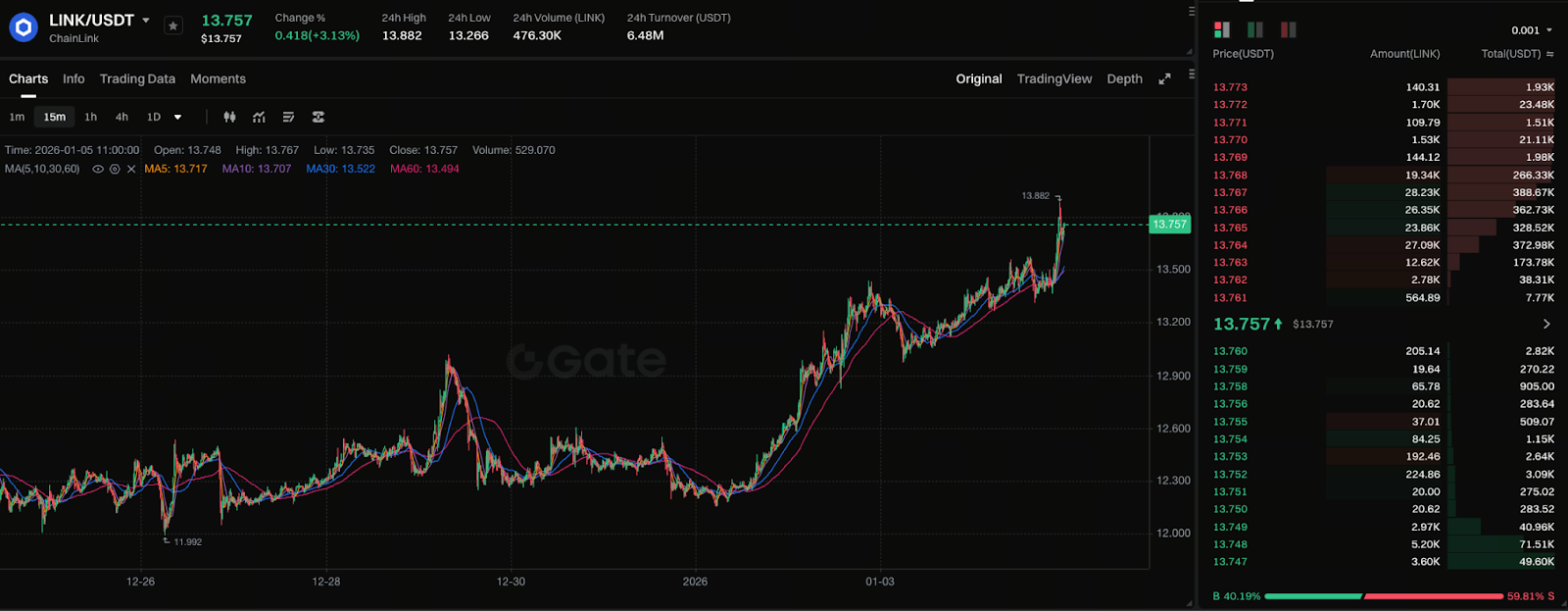
Image source: https://www.gate.com/trade/LINK_USDT
Below is a list of TradFi crypto coins currently attracting market attention, each representing a distinct path for TradFi integration:
Chainlink (LINK)
Chainlink acts as a bridge between blockchain and real-world data by providing oracle services. As a core infrastructure for many RWA projects, its token plays a pivotal role in the RWA ecosystem.
Ondo Finance (ONDO)
Ondo Finance focuses on the tokenization of traditional bonds, such as U.S. Treasuries, allowing investors to hold U.S. Treasuries on-chain. The project is a leader in the RWA space.
Avalanche (AVAX)
Avalanche is a high-performance blockchain platform that supports the issuance of multiple RWA projects. Its rapid settlement and interoperability give it a technological edge in TradFi integration.
Polymesh (POLYX)
Polymesh specializes in the issuance and compliance of security tokens. Its token is mainly used for compliance identity verification and security reviews within the TradFi integration ecosystem.
Stellar (XLM)
Stellar serves as an efficient payment and settlement network and is a foundational protocol for many RWA stablecoins and payment-grade TradFi asset issuances.
Algorand (ALGO)
Algorand’s high speed and low transaction fees make it a popular blockchain for the tokenization of bonds and other financial assets.
TradFi Crypto: Investment Risks and Opportunities
While TradFi crypto creates new possibilities for bridging traditional assets and blockchain, investors face several risks:
Regulatory Uncertainty: Some jurisdictions have yet to clarify the legal status of RWA tokens or establish investor protection mechanisms.
Operational Risk: The credibility of asset custodians and the quality of audits directly impact token value.
Transparency: Some tokens may lack adequate disclosure. Investors should pay close attention to project transparency.
Despite these challenges, as institutions enter the space and market education improves, TradFi crypto maintains strong long-term growth potential. On-chain innovation in bonds, money markets, and structured financial products may unlock new investment opportunities.
Looking Ahead: From RWA to Full Financial Ecosystem Integration
As financial institutions increasingly adopt blockchain technology, the digitalization of custody, settlement, and asset issuance is becoming more pronounced. TradFi crypto is moving from a niche concept toward mainstream financial services. Industry experts anticipate that upcoming trends will include the tokenization of stocks and on-chain issuance of structured products such as ETFs.
Furthermore, advancements in cross-chain interoperability and regulatory frameworks will continue to drive the maturation of the TradFi crypto market.
Summary
In conclusion, the TradFi crypto coins list is more than just a collection of tokens—it reflects the convergence of traditional finance and blockchain. By understanding the underlying value connections and market trends, investors can better position themselves to capture future opportunities in crypto asset investment.
Share
Content


Related Articles

Bitcoin's Future & TradFi (3,3)

Crypto Future Profit Calculator: How to Calculate Your Potential Gains

Crypto Futures Calculator: Easily Estimate Your Profits & Risks

What is Oasis Network (ROSE)?
The $50M Crypto Scam Nobody Is Talking About