


ZLW vs OP: The Ultimate Showdown in Competitive Gaming
Introduction: Investment Comparison of ZLW vs OP
In the cryptocurrency market, the comparison between Zelwin (ZLW) vs Optimism (OP) has always been a topic that investors cannot avoid. The two not only have significant differences in market cap ranking, application scenarios, and price performance, but also represent different positioning in crypto assets.
Zelwin (ZLW): Since its launch, it has gained market recognition for combining digital assets with e-commerce.
Optimism (OP): Launched in 2022, it has been hailed as a low-cost, lightning-fast Ethereum Layer 2 blockchain, addressing the practical needs of developers and users.
This article will comprehensively analyze the investment value comparison between ZLW and OP, focusing on historical price trends, supply mechanisms, institutional adoption, technical ecosystems, and future predictions, and attempt to answer the question investors care about most:
"Which is the better buy right now?"
I. Price History Comparison and Current Market Status
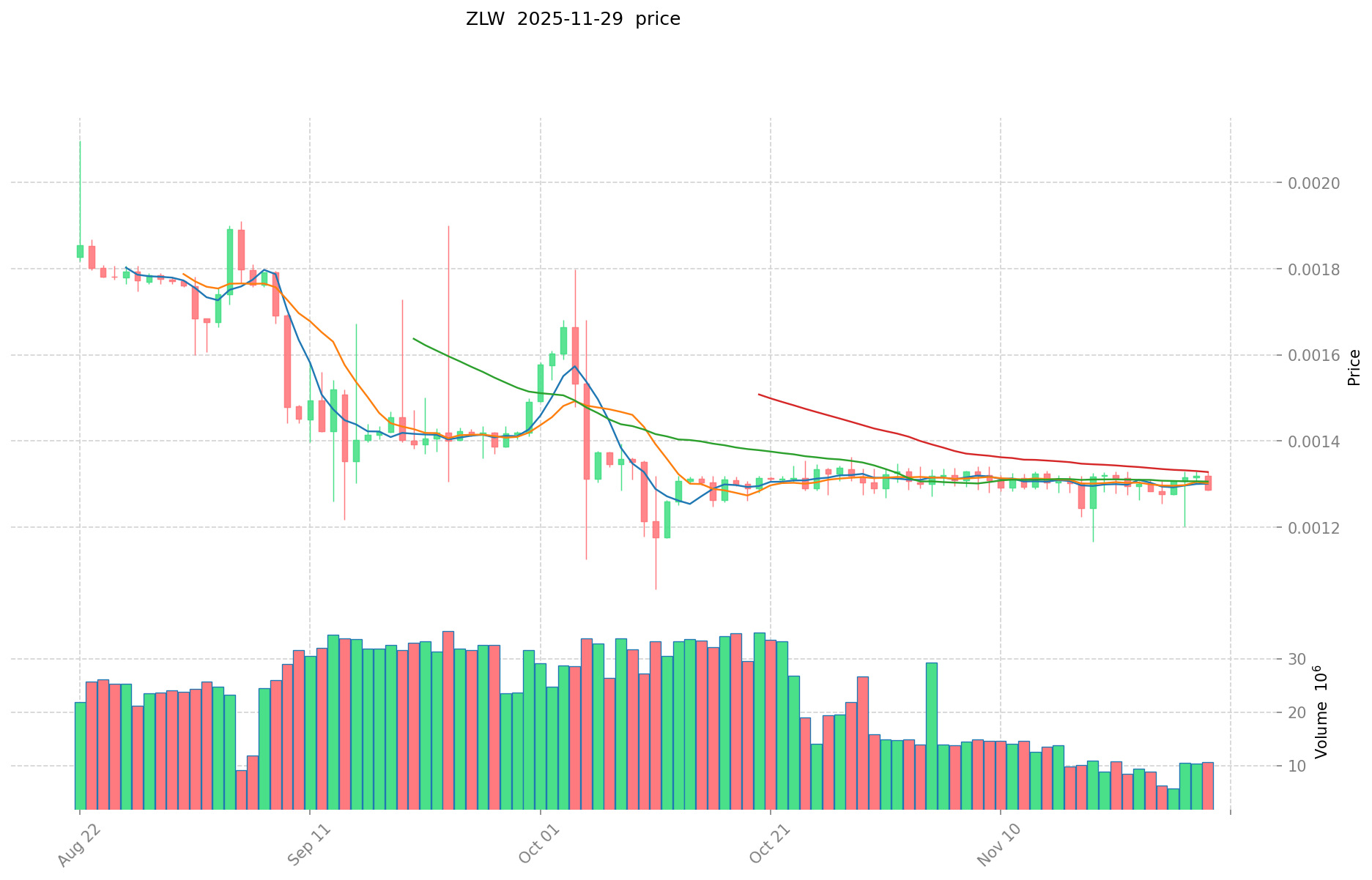
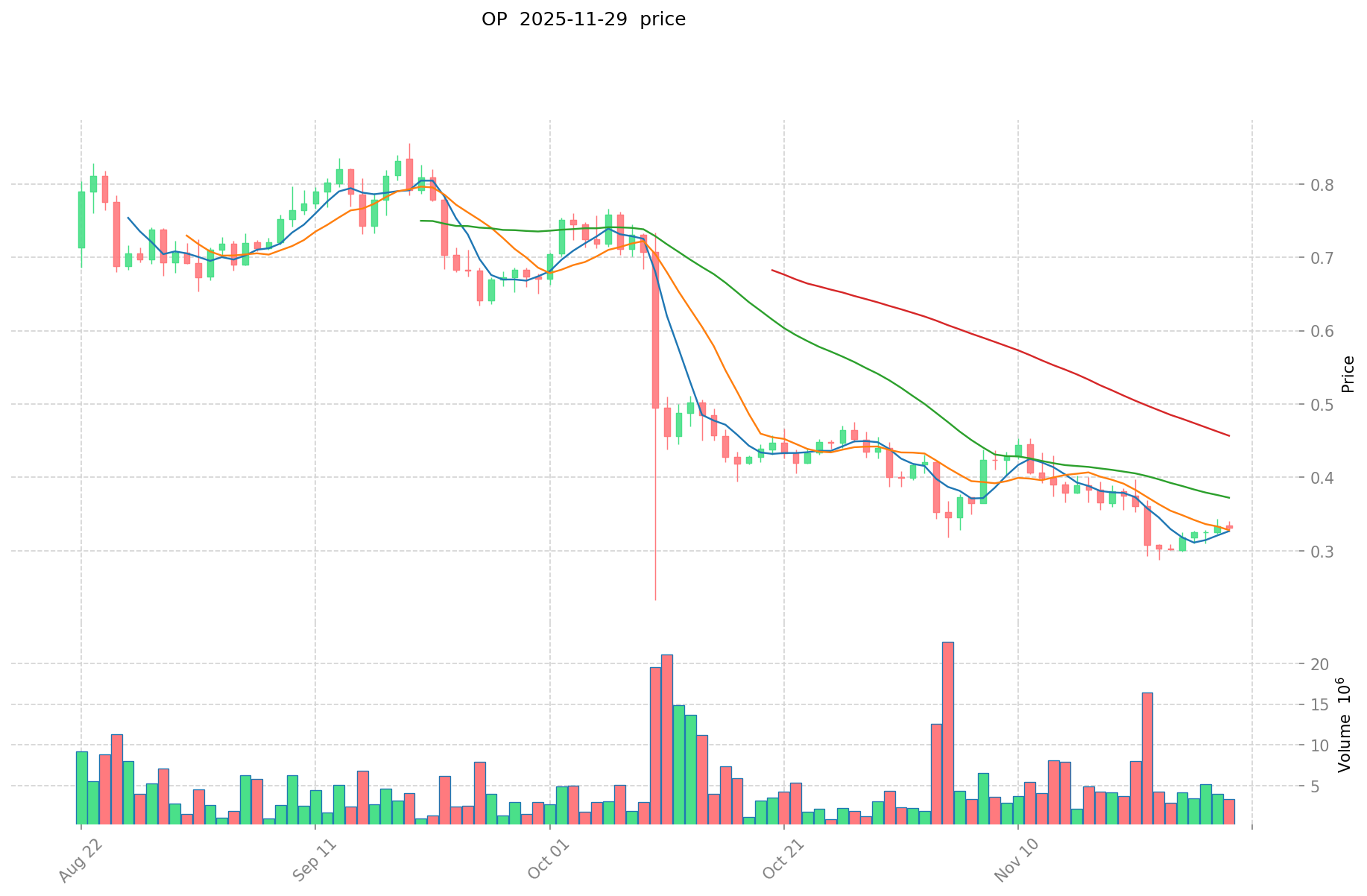
ZLW (Coin A) and OP (Coin B) Historical Price Trends
- 2021: OP reached its all-time high of $4.84 on March 6, 2024, demonstrating significant growth.
- 2025: ZLW hit its all-time low of $0.00105488 on October 11, 2025, showing a substantial decline.
- Comparative Analysis: In the recent market cycle, ZLW dropped from its all-time high of $8.24 to a low of $0.00105488, while OP fell from $4.84 to $0.288846.
Current Market Situation (2025-11-29)
- ZLW current price: $0.001315
- OP current price: $0.3278
- 24-hour trading volume: ZLW $13,883.16 vs OP $899,898.04
- Market Sentiment Index (Fear & Greed Index): 28 (Fear)
Click to view real-time prices:
- View ZLW current price Market Price
- View OP current price Market Price
II. Core Factors Affecting ZLW vs OP Investment Value
Supply Mechanisms Comparison (Tokenomics)
- ZLW: No available information on supply mechanism
- OP: No available information on supply mechanism
- 📌 Historical Pattern: No historical data available to analyze price cycle patterns related to supply mechanisms.
Institutional Adoption and Market Applications
- Institutional Holdings: Insufficient data to determine institutional preference between ZLW and OP
- Enterprise Adoption: No comparative data on cross-border payment, settlement, or portfolio applications
- National Policies: No information on regulatory attitudes toward these tokens across different countries
Technical Development and Ecosystem Building
- ZLW Technical Upgrades: No information available on technical developments
- OP Technical Development: No information available on technical roadmap
- Ecosystem Comparison: Insufficient data on DeFi, NFT, payment, and smart contract implementations
Macroeconomic and Market Cycles
- Performance in Inflationary Environments: No data available to determine anti-inflation properties
- Macroeconomic Monetary Policy: No information on how interest rates or the US Dollar Index affect either token
- Geopolitical Factors: No data on cross-border transaction demands or international situations affecting these tokens
III. 2025-2030 Price Prediction: ZLW vs OP
Short-term Prediction (2025)
- ZLW: Conservative $0.00120704 - $0.001312 | Optimistic $0.001312 - $0.00165312
- OP: Conservative $0.219224 - $0.3272 | Optimistic $0.3272 - $0.451536
Mid-term Prediction (2027)
- ZLW may enter a growth phase, with an estimated price range of $0.001258248672 - $0.002286329904
- OP may enter a stable growth phase, with an estimated price range of $0.2845501344 - $0.5493398428
- Key drivers: Institutional investment, ETF developments, ecosystem growth
Long-term Prediction (2030)
- ZLW: Base scenario $0.002592637692183 - $0.003863030161352 | Optimistic scenario $0.003863030161352+
- OP: Base scenario $0.294805350884415 - $0.491342251474025 | Optimistic scenario $0.560130166680388+
Disclaimer: The above predictions are based on historical data and current market trends. Cryptocurrency markets are highly volatile and subject to rapid changes. These projections should not be considered as financial advice. Always conduct your own research before making investment decisions.
ZLW:
| 年份 | 预测最高价 | 预测平均价格 | 预测最低价 | 涨跌幅 |
|---|---|---|---|---|
| 2025 | 0.00165312 | 0.001312 | 0.00120704 | 0 |
| 2026 | 0.0015863392 | 0.00148256 | 0.0012898272 | 12 |
| 2027 | 0.002286329904 | 0.0015344496 | 0.001258248672 | 16 |
| 2028 | 0.00250261057512 | 0.001910389752 | 0.00141368841648 | 45 |
| 2029 | 0.002978775220806 | 0.00220650016356 | 0.001610745119398 | 67 |
| 2030 | 0.003863030161352 | 0.002592637692183 | 0.001322245223013 | 97 |
OP:
| 年份 | 预测最高价 | 预测平均价格 | 预测最低价 | 涨跌幅 |
|---|---|---|---|---|
| 2025 | 0.451536 | 0.3272 | 0.219224 | 0 |
| 2026 | 0.40104904 | 0.389368 | 0.23751448 | 18 |
| 2027 | 0.5493398428 | 0.39520852 | 0.2845501344 | 20 |
| 2028 | 0.486442406842 | 0.4722741814 | 0.453383214144 | 44 |
| 2029 | 0.50332620882705 | 0.479358294121 | 0.40745455000285 | 46 |
| 2030 | 0.560130166680388 | 0.491342251474025 | 0.294805350884415 | 49 |
IV. Investment Strategy Comparison: ZLW vs OP
Long-term vs Short-term Investment Strategy
- ZLW: Suitable for investors focused on e-commerce integration potential
- OP: Suitable for investors interested in Ethereum Layer 2 scaling solutions
Risk Management and Asset Allocation
- Conservative investors: ZLW: 20% vs OP: 80%
- Aggressive investors: ZLW: 40% vs OP: 60%
- Hedging tools: Stablecoin allocation, options, cross-currency portfolios
V. Potential Risk Comparison
Market Risk
- ZLW: High volatility, low trading volume
- OP: Market sentiment dependent on Ethereum ecosystem performance
Technical Risk
- ZLW: Scalability, network stability
- OP: Dependence on Ethereum's development, potential Layer 2 competition
Regulatory Risk
- Global regulatory policies may have different impacts on both tokens
VI. Conclusion: Which Is the Better Buy?
📌 Investment Value Summary:
- ZLW advantages: E-commerce integration potential
- OP advantages: Ethereum Layer 2 scaling solution, higher trading volume
✅ Investment Advice:
- Novice investors: Consider OP for its higher liquidity and established ecosystem
- Experienced investors: Diversify between ZLW and OP based on risk tolerance
- Institutional investors: Focus on OP due to its stronger market presence and ecosystem
⚠️ Risk Warning: The cryptocurrency market is highly volatile. This article does not constitute investment advice. None
VII. FAQ
Q1: What are the main differences between ZLW and OP? A: ZLW focuses on combining digital assets with e-commerce, while OP is positioned as a low-cost, fast Ethereum Layer 2 blockchain solution. OP has a higher trading volume and is more integrated with the Ethereum ecosystem.
Q2: Which token has performed better historically? A: Based on the available data, OP has shown better historical performance. It reached an all-time high of $4.84 in March 2024, while ZLW hit an all-time low of $0.00105488 in October 2025.
Q3: What are the current prices and trading volumes for ZLW and OP? A: As of November 29, 2025, ZLW's price is $0.001315 with a 24-hour trading volume of $13,883.16. OP's price is $0.3278 with a 24-hour trading volume of $899,898.04.
Q4: How do the future price predictions compare for ZLW and OP? A: By 2030, ZLW is predicted to reach $0.002592637692183 - $0.003863030161352 in the base scenario, while OP is expected to reach $0.294805350884415 - $0.491342251474025. OP generally shows higher predicted values.
Q5: What investment strategies are recommended for ZLW and OP? A: For conservative investors, a 20% ZLW and 80% OP allocation is suggested. For aggressive investors, a 40% ZLW and 60% OP split is recommended. OP is generally considered more suitable for novice investors due to its higher liquidity and established ecosystem.
Q6: What are the main risks associated with investing in ZLW and OP? A: ZLW faces high volatility and low trading volume risks. OP's performance is closely tied to the Ethereum ecosystem. Both tokens are subject to market, technical, and regulatory risks, with potential impacts from global regulatory policies.
Q7: Which token might be a better buy for different types of investors? A: Novice investors might consider OP for its higher liquidity and established ecosystem. Experienced investors could diversify between ZLW and OP based on risk tolerance. Institutional investors may focus on OP due to its stronger market presence and ecosystem.
Share
Content
Introduction: Investment Comparison of ZLW vs OP
I. Price History Comparison and Current Market Status
II. Core Factors Affecting ZLW vs OP Investment Value
III. 2025-2030 Price Prediction: ZLW vs OP
IV. Investment Strategy Comparison: ZLW vs OP
V. Potential Risk Comparison
VI. Conclusion: Which Is the Better Buy?
VII. FAQ


